
This goes way beyond shooting oneself in the foot.
Sanity arrest would be more accurate.
And let’s not kid ourselves — the fractured relationship between Major League Baseball, trading as MLB, and the Major League Baseball Players Association, more commonly known as the MLBPA, is not the most compelling drama being played out in the bizarre world we live in today. Far from it.
But the fact these two confrontational partners in a $10 billion business couldn’t make a deal after two months of relative inaction followed by 16 or so hours of what turned out to be a grandstand play, is a crazy bad reflection on the state of the game.
To borrow a phrase from Romeo and Juliet — “a plague on both your houses,” best interpreted as meaning “I’m not going to take sides: you’re both at fault and I will have nothing to do with it.”
OK, I got that from Wikipedia, not from a memory worn out by past disputes between these antagonists. So repeat 10 billion times and call me when it’s over.
MLB had barely uttered the words “last, best offer” (as opposed to best last?) before MLBPA in effect said “call us when you’re serious.” This after what was supposed to have been “productive” talks on what was supposed to have been the last day of negotiations Monday, Feb. 28.
We don’t need to take the newly popular three or five best takes from this contentious debate.
One will do.
If commissioner Rob Manfred and MLBPA executive director Tony Clark read the book written by former commissioner Bud Selig, titled “For The Love Of The Game.” of all things, they might have come away with different takes.
Referring to the painful strike that eliminated a World Series in 1994 and, as if that wasn’t enough, also disrupted the following season, Selig admitted “the pain wasn’t worth the gain.” By most accounts the owners did, in fact, benefit from that agreement, but not nearly enough to overcome the impact of losing a World Series and parts of two seasons.
Here my take on the situation — if they ever read that chapter of Selig’s book, Manfred and Clark must have come away with different takes on “the pain wasn’t worth the gain” theory, with MLB counting on it as a signal of strength while the MLBPA took it as a sign of weakness.
Both were wrong. There will be plenty of pain, no gain this time.
The game doesn’t have Cal Ripken chasing Lou Gehrig or bogus home run records to aid in this recovery — and MLB and the MLBPA can share the blame.
Or as a modern version of Romeo and Juliet would put it: A pox on both houses.
Jim Henneman can be reached at JimH@pressboxonline.com
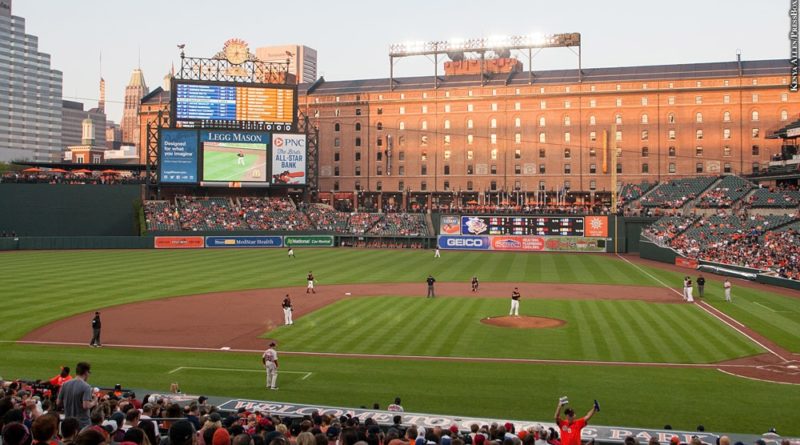
Photo Credit: Kenya Allen/PressBox