
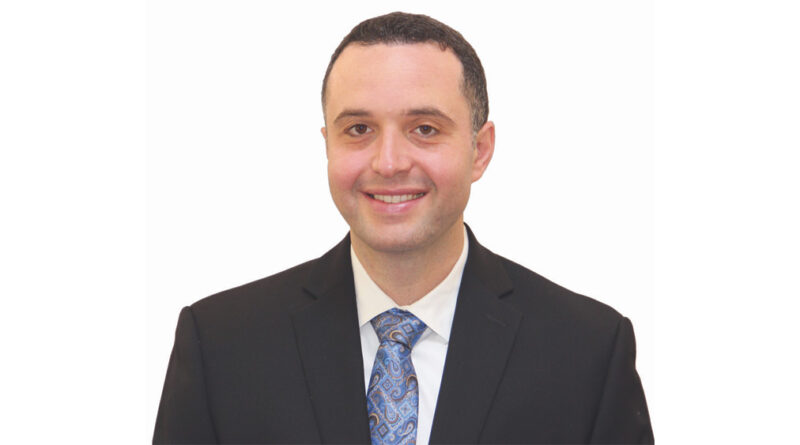
PressBox talked with Chesapeake Urology’s Dr. Daoud Dajani about the symptoms and treatment for prostate cancer and what all men should know about risks, screening, treatment options, and more.
PressBox: What is prostate cancer?
Dr. Daoud Dajani: The prostate gland is part of the male reproductive system. The job of a prostate gland is to create seminal fluid – the fluid that comes out as ejaculate.
When there is a cancerous growth in the prostate gland — where the cells start dividing without control — that is what we refer to as prostate cancer. The most common kind of prostate cancer is called prostate adenocarcinoma. Prostate cancer is divided into very low risk, low risk, medium risk, and high risk. Not all prostate cancer is equal. Most people with very low-risk and lower-risk cancer might not require treatment, but they do require surveillance to make sure their cancer does not progress. Medium-risk prostate cancer also can occasionally be observed, but for more aggressive cases of prostate cancer, we have multiple treatment options.
PB: Who should get screened for prostate cancer?
DD: The American Urological Association recommends that men between the ages of 55 to 69 should consider screening for prostate cancer after a thorough discussion of the benefits and the risks. Men who have a family history of prostate cancer should get screened earlier. And, as African American men have a higher incidence and more aggressive disease, they can consider screening at an earlier age, especially if there is a family history of the disease.
PB: Why is it important to screen before the onset of symptoms?
DD: Most men don’t have symptoms early on in the disease. That’s the whole idea of a screening test. Like colonoscopies help detect colon cancer in its earlier stages as do mammograms for breast cancer. Screening exams such as PSAs help detect prostate cancer in the earlier stages when the cancer is more treatable. We want to catch cancer before symptoms appear, which usually signals that the disease has progressed.
PB: You mentioned that African American men are at a higher risk of prostate cancer. Are there any other groups at heightened risk?
DD: According to several studies, African American men have a higher incidence of prostate cancer, especially the more aggressive form of the disease in general. It has a genetic component. The overall risk of being diagnosed with prostate cancer is about one in seven or eight men over the course of a lifetime. If there’s a family history, then that risk is higher.
PB: What are some of the treatment options for prostate cancer?
DD: It’s important to note that there is no one-size-fits-all treatment as every man is unique. For men diagnosed with low-risk or occasionally medium-risk prostate cancer, there are several options. Active surveillance is an approach to prostate cancer management that involves monitoring the disease and watching these patients closely for progression rather than having surgery or radiation therapy right away. Radical prostatectomy, which is the surgical removal of the prostate, is often used for early-stage cancer that hasn’t spread. In addition to prostatectomy, radiation therapy before or after surgery may be recommended. Other treatments may include hormone therapy, focal therapy, cryotherapy, and high intensity focused ultrasound (HIFU). It’s important to talk to your urologist about each option to see what is right for you.
PB: What is robotic surgery for prostate cancer treatment?
DD: Historically, traditional radical prostatectomy was performed through an open incision, but new techniques and advances such as robotic surgery have become much more common. In robotic prostatectomy, the prostate and occasionally the lymph nodes around the prostate are removed, taking great care to preserve the surrounding nerves that control erectile function and continence. Robotic surgery, an area in which I specialize, is minimally invasive and has been shown to have excellent outcomes with a quicker recovery time. Robotic surgery allows for a level of control for the surgeon that is superior to open surgeries, especially when operating deep within the pelvis. Using the robot allows my hand motions to be translated into precise movements that are executed by the robot’s arms. The technology also provides 3D images and higher magnification for great precision.
PB: What are the benefits of robotic surgery?
DD: The benefits of robotic prostatectomy include smaller incisions in the abdomen, less post-operative pain and bleeding, a potentially quicker recovery, and a shorter hospital stay. In select cases, we’re able to perform robotic prostatectomy as a same-day surgery in a hospital. The two risks that are related to radical prostatectomy include urinary incontinence and erectile dysfunction, which are two very important factors for men. With the advent of the robot, for example, those risks are significantly lower because we’re able to spare nearby nerves that affect continence and erectile function. As far as incontinence, most men have excellent outcomes over time.
PB: What should men know when reaching out to Chesapeake Urology? ()
DD: At Chesapeake Urology, we are continually raising awareness about prostate cancer. Screening for prostate cancer can save lives. We strive to provide each patient with excellent, compassionate care.
Daoud Dajani, MD, is a fellowship-trained urologist at Chesapeake Urology specializing in advanced robotic and laparoscopic surgeries to treat malignant and benign conditions of the urinary tract. His surgical areas of focus include advanced techniques in prostate, kidney, and bladder cancer surgery. He sees patients in the National Harbor and Prince George’s County regions.
Find a specialist at a convenient location at chesapeakeurology.com or call 855-405-7100.