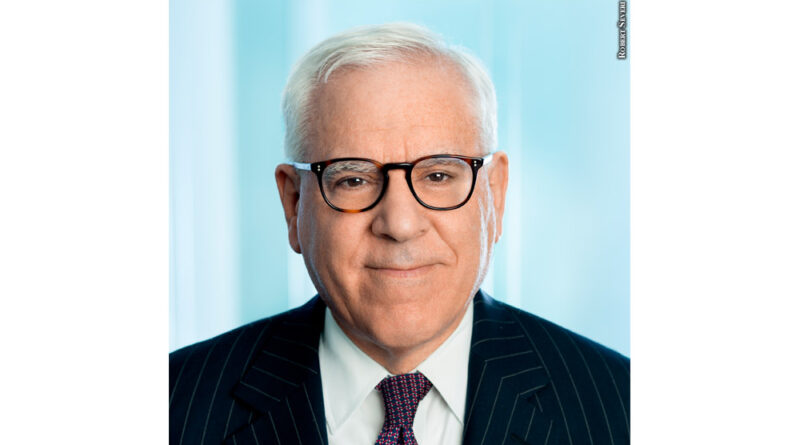
On Jan. 31, the Orioles announced that a group led by Baltimore-born billionaire David Rubenstein had agreed to buy a control stake in the club for $1.725 billion, pending review by MLB. PressBox’s Stan “The Fan” Charles, Glenn Clark and Jim Henneman and former Orioles manager Buck Showalter share their advice for Rubenstein before he takes control.
Stan “The Fan” Charles
Given the opportunity to offer advice to incoming Orioles owner David Rubenstein, most fans would probably default to, “Hey, sign Adley Rutschman, Gunnar Henderson, Jackson Holliday and while you’re at it, extend Corbin Burnes and Grayson Rodriguez … and oh, better extend Félix Bautista in a year’s time.”
Or maybe you’d take the view from above and say, “David, you have to extend Mike Elias and Brandon Hyde.”
For me, I am going to go off the grid a bit and tell you about one of my favorite aspects of being a member of the media covering the team — the Orioles Hall of Fame. My advice to Rubenstein is to go back to the spirit of the club’s Hall of Fame and make it clear moving forward that the team will abstain from directing who can and can’t be nominated for the Hall.
That responsibility should go back to the passionate but neutral observers of the ongoing history of the franchise — the media that cover the team and the Oriole Advocates, the volunteer organization that has for years done the yeoman’s work of Orioles charity endeavors.
If you look it up on the Orioles website, the club’s Hall of Fame was formed back in the mid-’70s by two past presidents of the Oriole Advocates, Allen Barrett and Jack Buckley. With the encouragement and cooperation of the club, the Orioles Hall of Fame was created. Its first two inductees were Brooks and Frank Robinson.
Since its inception, the Hall has welcomed in 82 deserving members. Coaches, managers and players go in as men in uniform. The Hall has added two categories to include more folks deemed worthy of induction. Special fans can go in as a William “Wild Bill” Hagy Award recipient, which has been given to Hagy and most recently super-fan extraordinaire Mo Gaba.
Prior to that, the Advocates created the Herb Armstrong Award, designed to allow non-uniform personnel to be honored. Those recipients include owner Jerry Hoffberger, executive Harry Dalton and broadcasters Joe Angel, Fred Manfra, Bill O’Donnell and Chuck Thompson. This category also opened the path for team trainers Ralph Salvone and Richie Bancells, longtime public relations director Bob Brown and Julie Wagner, who worked for the team for decades in community relations.

(Photo Credit: Courtesy of the Baltimore Orioles)
I know all this firsthand because after I had been on the radio for five or six years, I was asked to participate by serving on the selection committee that crafted the ballot. As such, I would also have a vote.
I always prided myself on being an active member of the Orioles Hall of Fame process. I dutifully went to the annual dinners, when we could nominate whoever we felt were worthy of consideration. Twenty-plus committee members debated the pros and cons of possible nominees.
But by the mid-2000s, the Hall was running out of clear-cut candidates for uniformed inductees. Around this time, the ballclub sent a couple representatives to the nominating dinners. I remember I brought up the name of Larry Lucchino, once a part owner and president of the team. I thought his work on Camden Yards made him a slam dunk. I also brought up the name of Edward Bennett Williams, whom I thought deserved a place in the club’s Hall for signing the lease that led to Camden Yards.
Williams was very sick, but his signature was vital to then-Gov. William Donald Schaeffer’s attempts to build a new ballpark, which would ensure that the Orioles would remain in Baltimore for decades to come.
I was not particularly persuasive in selling the other members on Williams or Lucchino being in the Hall, but I vowed to do better in the years to come. The following year, I showed up determined to really push for one of my two Herb Armstrong Award nominees.
Before I could get the opportunity to nominate my two legendary figures again, the Orioles stepped in and changed the rules. The Oriole Advocates and media members were no longer going to nominate potential inductees. This would now be in the hands of the club to give us a list of who was worthy.
The Orioles even gave us a reason: They wanted scouts to begin to go in. Not a bad idea, but hardly worthy of taking the nominating power away from the people who gave close to 30 years to the Hall.
I urge David Rubenstein to allow the Orioles Hall of Fame to be created by who it was meant for — the Oriole Advocates and the local media covering the team. To do it the way it’s been done for many years is a disservice to the history of the franchise.
Glenn Clark
MASN
That’s purposefully broad, of course. The obvious issues are the Nationals’ rights fees, the functionality of the app, the availability of streaming for those who aren’t cable subscribers, the need to broadcast more spring training games and the overall future of regional sports networks in general. But “MASN” should survive in some capacity long term, even if it’s just digital.
In whatever capacity it does survive, there is an opportunity for it to become a Baltimore sports video hub that simply does not exist currently and arguably has never existed due to the regional obsession media entities have had with the D.C. market. Producing and/or broadcasting major high school sports events would be particularly beneficial in this market. Broadcasting minor league games on nights the Orioles don’t play has always felt like a reasonable option for the entity.
Don’t stop with Cal Ripken Jr.
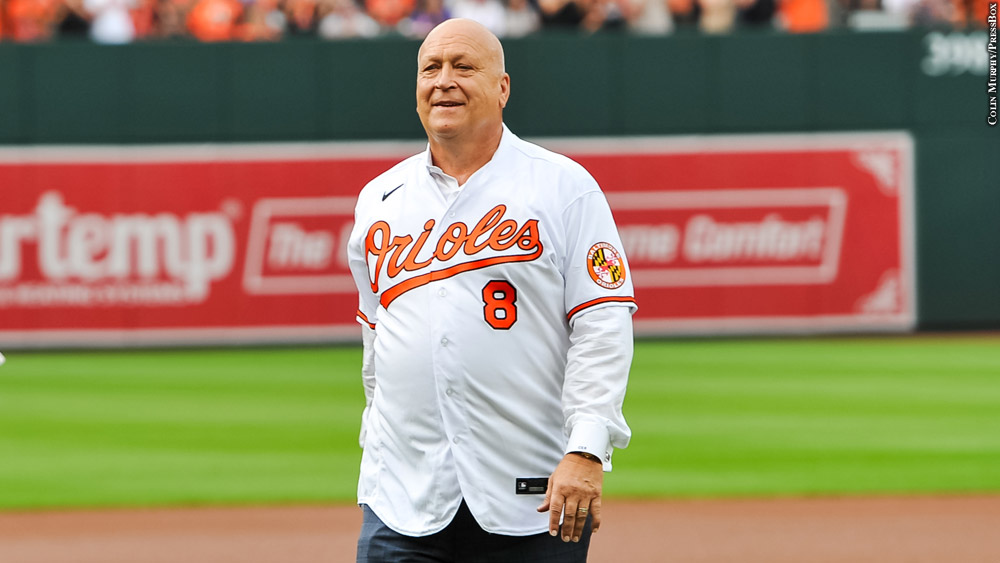
Issues between the Orioles and their alumni have been the exception, not the rule. It’s difficult to imagine any professional sports team never having conflict with a former member of the organization, but the instances when frostiness has existed between the club and a legendary player have been among the most disappointing for the team’s fans.
Involving Ripken in the ownership group is a really public sign to the fan base. It probably doesn’t mean a ton in practicality but for Orioles fans, it means everything. Making sure the beloved former players always feel welcome and never have to pledge fealty is a small thing that goes a long way. The new ownership group could make an early declaration about this by recognizing Mike Mussina alongside the club’s other prominent Hall of Famers instead of leaving him on the outside of the group because of a silly plaque.
Concerts shouldn’t stop. In fact, there should be more.
The interest that John Angelos has had in pairing the club with music has become a bit of an internet trope. That’s always been unfair. The Orioles expanding Camden Yards’ usage has been a good thing for the community and the club. Not only have marquee concerts offered additional revenue streams, they’ve also provided opportunities for folks who aren’t baseball fans to discover the stadium and perhaps reconsider whether they might like to return.
The team should build off of the momentum of the major concerts it has hosted so far (Billy Joel, Paul McCartney) to attempt to attract acts that would be appealing to younger fans, allowing them to experience their own magical nights at the ballpark. The club should explore the possibility of hosting other events as well. The lease does not prevent events like soccer matches, college football games or holiday specials like “Enchant” from being held at the venue. All would be beneficial.
Jim Henneman
Having often been accused of offering unsolicited advice, I’m not inclined to offer my two cents worth to billionaires, so it’s probably best I not start with David Rubenstein, the newly anointed and soon-to-be principal owner of the Baltimore Orioles.
But … you know there’s always a but. And since just about everybody with an interest in the club, especially the recharged fan base, has an idea about how things should be done in the near and long-range future, what the heck — another suggestion won’t create an overload. Or will it?
For what it’s worth, should Rubenstein call, and I’m sure I’m not on his speed dial, here’s what I would tell him:
• You’re here at the right time. The general manager has a good thing going. Draw on the memories of your youth, when farm-raised players like Brooks and Boog, Ron Hansen, Jim Palmer, Dave McNally, Milt Pappas, Steve Barber, Chuck Estrada, Jerry Adair, Dave Johnson, Andy Etchebarren, Bobby Grich, Don Baylor, Dennis Martinez, Mike Flanagan and later on Eddie Murray and Cal Ripken, kept the team on course.

(Photo Credit: Colin Murphy/PressBox)
• Don’t be tempted by the lure of mega superstars in search of 10-year contracts. They don’t work. I’m pretty sure the analytics people will say as much because those are numbers that don’t lie. Make it a priority to build around the nucleus of your talent base, realizing you can’t keep, or please, everybody. When necessary, use personnel capital to fortify the base as was done with Luis Aparicio, Frank Robinson, Reggie Jackson, Lee May, Ross Grimsley, Ken Singleton, Scott McGregor, Tippy Martinez, Rick Dempsey and Adam Jones, all of whom were star players in their own right.
• Staying the course, of course, is not the blueprint of most of the last 40 years — but the one from your preteen and teen years, when the Orioles built the “Best Damn Team In Baseball” with an infusion of young, homegrown talent that provided the cornerstone for the team that had the best record in the game for a quarter of a century.
• Somewhere along the line, with the advent of free agency, your team got off the course, lured by the possibility of the quick fix. It didn’t work, as is the case more often than not. I don’t know what the numbers are, but I would draw a line on the length of contracts (you’ll have to do the math on the money) compared to a player’s age and stick to it. In the long run, you will be ahead of the game.
• Most of all, make your homegrown talent a priority. Extend when feasible AND possible — and be prepared to move on to the next chapter when necessary.
How’s that for two cents worth — times 50?
Buck Showalter
As told to Glenn Clark Radio

You’ve got to understand the fan base. There’s such a pure love and deep-seated roots of people. It’s been handed down from generation to generation. Just be sincere and be open about it. Let the fans see that you care as much about them being good as they do because nobody cares more about their team than Oriole fans. They just want you to put a product on the field that they can trust. When you buy a club, you’re basically taking the trust of all those fans that venture down to Camden Yards. When you’re playing at midnight on the West Coast against the Seattle Mariners, they’re up and they’re going to be sleep-deprived the next day at work because it matters to them. As long as they know it really matters to you, you’re going to be fine because they will sniff out a phony there in a heartbeat. It’s like baseball. You’re going to know everything there is to know about a player, a coach and a manager over the course of a season, so just be yourself and be sincere.
Photo credit: Robert Severi
Issue 285: February/March 2024
Originally published Feb. 21, 2024