
When I walked out of the Ravens’ facility on Jan. 2, 2013; I was heading toward what I knew would be the most significant afternoon of broadcasting I had done as a Baltimore sports talk radio host.
While the topic of Ray Lewis’ retirement announcement was definitely going to be at the center of my four-hour show, I didn’t know exactly how to drive the conversation. I didn’t want it to just be four hours of memories because he still had games to play in the postseason. I kept running through the ramifications of the announcement in my head, and this was the question I came up with.
“What is the identity of the Baltimore Ravens post-Ray Lewis?”
We know now that the immediate answer was “Joe Flacco,” but at the time Flacco had neither won a Super Bowl nor signed a long-term deal. The more honest answer was about to become “John Harbaugh,” at least if you asked Bernard Pollard. And the most common answer I got that day was “Ozzie Newsome.”
It was the answer that gave Ravens fans the most peace, right? The biggest reason the Ravens had sustained success as an organization was the shrewd drafting and decision-making from the then-general manager, offering hope that as personnel changed, the quality of the franchise would not.
But the question existed because I was secretly wondering if perhaps the significance of the organization was really predicated on the truly iconic, generational linebacker who helped keep the product on the field relevant and whose pop culture cache lifted an entire city.
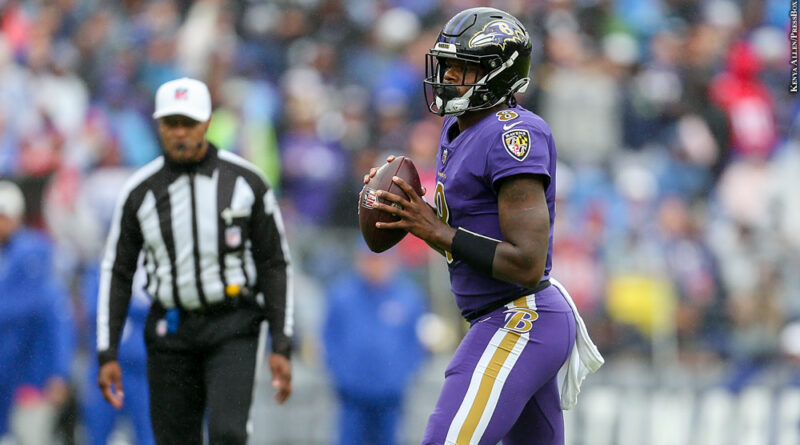
That question crept into my mind again this week as we look at a Ravens franchise that appears to again be at a bit of a crossroads. With the Lamar Jackson situation already looming over the team, the news of the NFLPA’s report card and disastrous scores for the team’s strength staff created a bit of a perfect storm. The flood of negative comments from former players (and one prominent current player) that followed represented a public backlash we have rarely seen toward a team that has been viewed as one of the more stable franchises in the sport.
I’m not really here to debate the merits of anything Rashod Bateman (or Bam Bradley or Quincy Adeboyejo or Carl Davis or Matthew Judon or frankly anyone else) had to say. I’m not well enough versed on strength training to be able to say with confidence what was and wasn’t Steve Saunders’ fault throughout the past couple of seasons.
But between what we’ve seen publicly and private conversations I’ve had with players, I’m comfortable with saying that Saunders should not have been kept in his role for as long as he was. Whether the team’s issues were actually at all directly (or even somewhat indirectly) his responsibility, it is clear that the players largely did not have faith in his leadership.
The bigger immediate question is “message vs. messenger.” Was Saunders’ coaching merely a reflection of a style that John Harbaugh wanted? Is new strength and conditioning coach Steve Elliott going to have the exact same planning and leadership that players found to be so disastrous under Saunders? And if Saunders’ style and message wasn’t what Harbaugh wanted, how did the head coach allow for a strength coach to operate in such a rogue way for as long as he did?
Whatever happened, the message has to change. The organization has to gain back the trust of the players when it comes to their health.
But the questions about Harbaugh’s leadership are overwhelmingly fair. There was ambiguity when it came to Greg Roman. Whatever your feelings were about his offense, when players were healthy it was successful. There was a reasonable argument that could be made for why Harbaugh retained him as long as he did. Given the picture of how disastrous the trust was between players and Saunders, there appears to be no defense for how long Saunders remained employed.
John Harbaugh is a legendary, highly successful NFL head coach who just led his team back to the postseason this year. But there have been fair criticisms about his postseason success since 2014 and the overall direction of the franchise. All of these things can be true at once. None of this suggests that the Ravens would possibly fire their coach in the middle of the offseason (that’s frankly insane), but direction needs to be established.
And it all left me questioning the team’s identity all over again.
I ask this question as bluntly as I possibly can. What currently gives you faith in the overall health of the Baltimore Ravens?
The answer for the last five years has of course been Jackson. But with Jackson’s future in doubt, where does the faith come from? GM Eric DeCosta has made some good decisions, but the current roster isn’t loaded with future Hall of Famers in the prime of their careers, either. He has not fully earned an “In Ozzie We Trust” type of reputation.
The defense is good. Roquan Smith is a special player. But the NFL has made it nearly impossible to win championships via defense.
Off the field, the Ravens appear to be largely healthy. They have become a truly national brand (although arguably to their detriment they have largely operated as such in recent years). But social media followings and podcasts and community involvement can’t make up for questions about the direction of the football team.
Strong ownership can provide that faith in a franchise’s health. It is time for Steve Bisciotti to show greater involvement in the franchise than he has in recent years. One of the things Ravens fans have liked most about the owner is that he has remained appropriately “hands off” in most football matters during his tenure. No one wants Bisciotti to suddenly turn into Jerry Jones. But it is comforting for a fan base to hear “this isn’t acceptable and it won’t happen again” from time to time. The Steve Saunders mess is one of those times.
But make no mistake. Nothing will provide more comfort for the fan base than quarterback stability. Marlon Humphrey’s response to the events of the past week was particularly poignant. For as disastrous as Saunders’ tenure may have been, Harbaugh largely still has the support of his players. But Jackson “need to be signed today.”
Until it happens, I think we’re all going to have a lot of questions about why we should believe the Ravens are any healthier than, say, the Jacksonville Jaguars.
Photo Credit: Kenya Allen/PressBox