
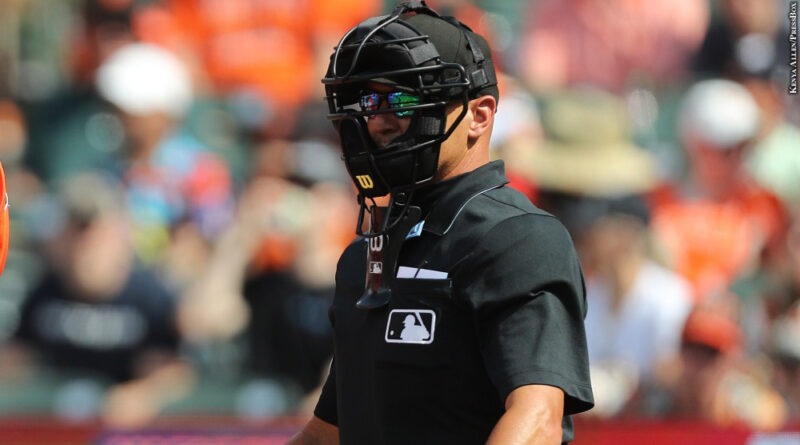
The Automated Ball-Strike (ABS) Challenge System is a work in progress as Major League Baseball continues to experiment with its impact on the game. However, some think it will lead to fully automated calls at the plate at some point in the future.
Former MLB umpire Dale Scott said that the technology is still being evaluated as adjustments continue in the sport.
“I think maybe the jury is still out on that,” Scott said on Glenn Clark Radio April 1. “The system has changed the strike zone. I mean, the strike zone is not the same as it was last year and all the years previous.”
Scott spent 33 years as a MLB umpire from 1985-2017. He worked almost 4,000 games and spent about 1,000 behind the plate calling balls and strikes. His career included three World Series, three All-Star games and six League Championship series.
Scott explained that ABS has changed how the strike zone is defined, shifting from a traditional zone to a more precise system. He said it includes changing the top and bottom of the zone by using percentages of a player’s height rather than visual reference points.
The adjustment period has created challenges for umpires, according to Scott. They must now align their calls with a system that evaluates pitches differently than before. He noted that even the slightest errors — fractions of an inch — can now be flagged.
“I think people are having a really good time seeing that umpires have missed pitches,” Scott said. “But some of these misses, man — one-tenth of an inch, two-tenths of an inch, technically that’s a miss, it’s a pretty tough thing to do to get those 100 percent right every single time.”
Despite the scrutiny, Scott said that the purpose of ABS is not to embarrass umpires, but to improve accuracy of calls.
“I don’t think the goal was to shame umpires,” Scott said. “I think the goal, like every umpire and everybody that is a fan of baseball, you want to get pitches and plays right.”
Scott added that missed calls and human error have always just been a part of the game due to factors like pitch movement, catcher positioning and limited reaction time. ABS, however, is introducing immediate decisions, Scott said.
“Umpires have always been second-guessed, but now we’re second guessed in real time, within seconds after the pitch,” he said.
The new system has sparked debate about whether or not baseball will eventually move toward a fully automated system when it comes to calling balls and strikes. Scott believes the future of fully automated games is clear.
“I think it will be,” Scott said. “I think that’s the direction it’s going.”
Scott said scenarios like where a missed call could decide a game, is a driving point for this shift in baseball.
“I just think that when fans and people say, ‘Wait a minute, we have the technology.’ … I think it is going to eventually evolve to pitches being called by ABS,” he said.
For more from Scott, listen to the full interview here:
Photo Credit: Kenya Allen/PressBox