
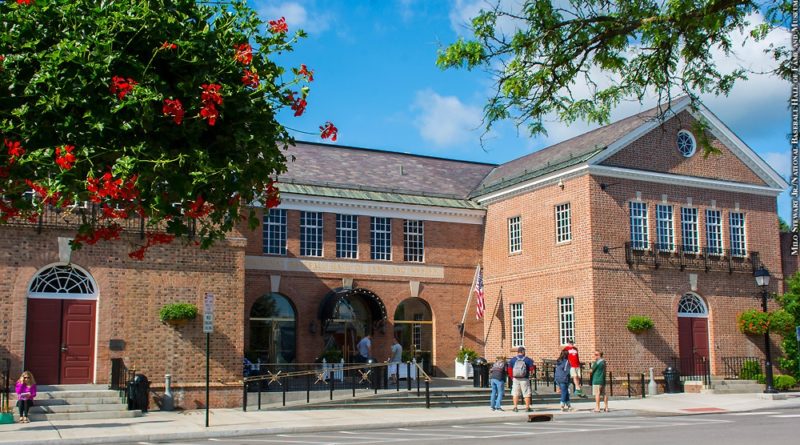
It’s time to take care of some unfinished business and make a deposit in the “interest of full disclosure” file in regard to the recently completed voting for the Baseball Hall of Fame.
It is not mandatory for voting members of the Baseball Writers Association of America (those with at least 10 years service and still active) to make their ballots public, but the vast majority do so and I’m not an exception. So, what follows will at least save a trip to the bbwaa.com or bbhoftracker.com, in addition to putting this vote on record.
Those familiar with my voting habits will see no surprises here, meaning no change in agreements or disagreements. Since there were no inductees last year the only change in my completely filled 10-player ballot was to find a spot for David Ortiz, the only candidate to get better than 75 percent of the vote and earn election this year. Omar Vizquel got that distinction for various reasons, on field and off, so we can move on from there.
The inclusion of Ortiz immediately prompts another need for full disclosure, because he is one of at least six bonafide candidates with some association with possible use of performance-enhancing drugs. From my vantage point I have separated the six into three categories.
The first is based on supposedly anonymous tests randomly given to determine the necessity of adopting a universal program. Ortiz and Gary Sheffield reputedly were called out (but never formally charged) in this manner, but there have been no indications either has failed a subsequent test, so from this vantage point it was easy to give a pass.
The second group includes those who have been suspended for use of PEDs, Manny Ramirez and Alex Rodriguez, and any discussion about their merits will have to be discussed elsewhere. I’m not wasting the time. The third group consists of Barry Bonds and Roger Clemens, where testimony from personal trainers has resulted in someone going to jail for refusing to testify in one case, and what would appear to be overwhelming evidence in the other.
I totally get it that all of these players would probably qualify for the HOF without any artificial help. What bothers me most, especially in the cases of Bonds and Clemens, is the drastic changes so late in their careers that not only inflated personal resumes, but completely obliterated what had been hallowed records.
I just can’t go there. Without elaborating on what has been rehashed for the last 10 years I’m giving myself a final pass. If you are willing to invest the time in a thorough read, former MLB player and current ESPN commentator Doug Glanville states the case very eloquently.
With all the soiled laundry out of the way, on to the rest of the ballot. As usual it has a full contingent of 10 names, which disturbs some who blame voters like myself for “lowering the bar.” If that means opening the door for more candidates, my response is that the bar actually is “adjusted” with every election.
Sometimes, with a light election like last year when nobody got in, it goes up. Other times, like this year when Veterans Committees added four to join Ortiz, by necessity it adjusts downward, but to call it “lowering the bar” would be wrong.
Alphabetically the first two on my ballot who aren’t following Ortiz to Cooperstown fit very nicely into this discussion. Bobby Abreu and Mark Buehrle are much closer to the 5 percent cutoff line that would drop them from the ballot than the 75 percent needed for election, but I have no problem arguing their cases.
Abreu was a grossly underrated outfielder with some supposed defensive flaws, but he has a HOF-worthy 921 extra-base hits, a career .291 average, 395 on-base percentage, an .870 OPS and oh, by the way, 400 stolen bases. Don’t dismiss his long-range chances.
The new analytics tend to dismiss the left-handed Buehrle’s 214-160 won-lost record but he averaged 221 innings pitched during 16 seasons, coming within four outs in his last start of registering 15 straight years with 200 or more innings. He’s one of those rare pitchers, like Mike Mussina, who bowed out on top, posting a 15-8 record and a career-matching 3.81 ERA during his last season (2015). His numbers will resonate going forward, either with the BBWAA electorate or a Veterans Committee in the future.
Next up is first baseman Todd Helton, who has had to battle the benefits of Colorado’s Coors Field throughout his career. Even with a hitter-friendly home field, a .316 average and whopping .414 on-base percentage are hard to overlook. He’ll get to Cooperstown sooner rather than later.
Right-hander Tim Hudson is officially the longest shot on this list, having failed to get the 5 percent of the vote needed to remain on the ballot. Still, his 162-game average — 16-9, 221 innings pitched, 3.49 ERA — is very similar to Buehrle and he’s destined to be a name that will come up again later.
Second base is probably the toughest position for me when it comes to HOF credentials, so Jeff Kent has easily been the biggest mystery to me on this ballot. It was said he was defensively challenged, but I don’t understand how he could spend just about his whole career playing in the middle of the infield and batting in the middle of the order, only to get such little support for Cooperstown.
I have heard people compare Scott Rolen’s defensive ability to that of Brooks Robinson, which on its own is enough to get my attention. He is rising steadily and could be the next nominee by the BBWAA.
It took me awhile to come around to the thinking that Curt Schilling belonged in the Hall of Fame. He ranked behind Mussina on my early ballots but eventually there was enough room and I added him. I was tempted to take him up on his request to be removed but for an unexplainable reason decided against. On to a Veterans Committee.
Gary Sheffield, as mentioned up top, has Hall of Fame credentials, pure and simple. His almost obscure connection to Bonds’ BALCO scandal, which he forcefully defended, is the only reason he’s not in Cooperstown, but he’s not trending as fast as I thought he would.
If Kent’s lack of support is the biggest mystery to me, then the absence of support for Billy Wagner is the biggest surprise. It probably shouldn’t be because relief pitchers not named Mariano Rivera don’t get much love. The lefty reliever’s career 0.998 WHIP (walks plus hits divided by innings pitched) is off the charts. Some day it will be on his HOF plaque.
I don’t believe there are any magical numbers to define a Hall of Famer, which I think is pretty obvious by the 10 names on my ballot. However, Wins Above Replacement (WAR) is more and more becoming a go-to number for a BBWAA electorate that is getting younger and more analytical by the year, and that’s probably a good thing.
Because it’s a number not easily digested, explained or understood I’ve had a problem using WAR as more than a good reference point, a self double-check if you will. Having said that, one thing that surprised, maybe even astounded me, were the WAR numbers I discovered while researching my ballot before submitting it.
What I learned was that the average WAR numbers for Hall of Famers came in between 50 and 70. All but one player on my ballot fit comfortably in that range. The only one missing is Wagner, but that doesn’t count because Rivera didn’t make that cut either.
At the end of the day I’m convinced there were at least a half dozen Hall of Famers on this year’s ballot. Some will disagree with that assessment, but to be honest I’m more concerned that a two-time Cy Young Award winner (Tim Lincecum) and former All-Stars (Hudson, Ryan Howard, Mark Teixeira) fell off the ballot.
I way too often hear the phrase “it’s not the Hall of Very Good,” and I completely agree. But my definition of “very good” is any player who qualifies to get on the ballot, which requires a minimum of 10 years service time in the major leagues just to be eligible. If you disagree with that assessment we’d probably have a difficult conversation.
Beyond that 10-year requirement there is a screening committee charged with another degree of separation. That leaves a final ballot, which this year numbered 30, all of whom I think we can at the minimum classify as “damn good,” which is where the fun begins.
I think we can all agree we’re looking for greatness here. But where do you draw the line?
Great? Greater? Greatest?
I think “damn good” is a damn good place to start. Then we can talk about adjusting the bar.
Jim Henneman can be reached at JimH@pressboxonline.com
Photo Credit: Milo Stewart Jr./National Baseball Hall of Fame and Museum