
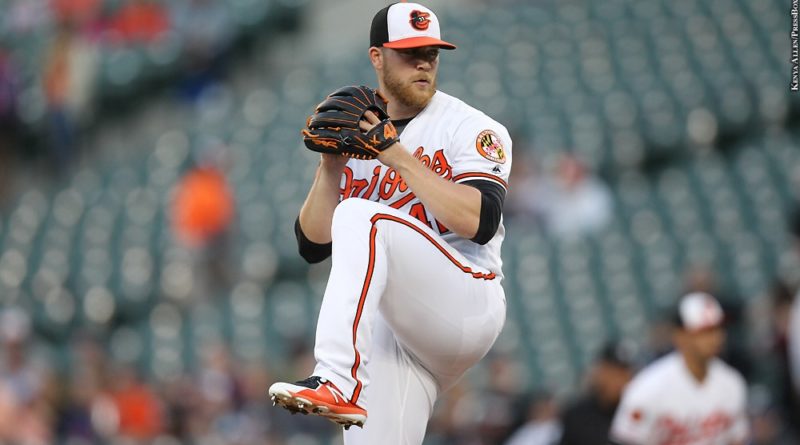
Former Orioles pitcher David Hess was forced to leave baseball last year due to cancer, but now he’s back pitching in the Tampa Bay Rays organization.
Hess, who turns 29 on July 10, began experiencing intense shortness of breath and an extreme tightness in his chest, which led him to doctors in October 2021. Doctors discovered a cancerous germ cell tumor in the center of his chest, which pressed on his heart down to his stomach. Fluid built up around the lungs and heart. He wasn’t able to breathe properly. He was left with five or six blood clots throughout his chest as well.
Hess said the tumor in his chest “was like a pot of coffee without the handle.”
“When I first went to the hospital, it was one of those things, more just trying to survive to get to chemo than chemo itself was intimidating,” Hess said on Glenn Clark Radio June 27.
Less than a year later, Hess can play ball again. The 6-foot-1, 215-pound right-hander is now with Triple-A Durham, having appeared in five games this season for the Gulf Coast League Rays and Durham. Hess is sporting a 2.57 ERA entering play June 29.
Hess’ first game back with the Bulls came against the Jacksonville Jumbo Shrimp June 21. The right-hander pitched a 1-2-3 inning in nine pitches. A positive mindset and faith played a major role in his life prior to and during his diagnosis and treatment.
“It was as close to a miracle I think that I have experienced,” Hess said. “To be able to have that personally is pretty wild.”
A couple days after Hess’ diagnosis, former teammate Trey Mancini was on Hess’ mind. Mancini missed the 2020 season while undergoing colon cancer treatments. He was back on the field in 2021 playing for the Orioles.
Hess and Mancini spoke about how Mancini made it through and how he was able to rejoin the world of baseball. Hess was extremely motivated by Mancini’s journey. Mancini also told him he wished he did certain things differently while going through treatments.
“As athletes we’re not really good at resting. … [Mancini] said don’t try to essentially be a superhero through it,” Hess said. “If you need to rest, take it as easy as possible and let your body do what it has to do, because at the end of the day if you don’t do that it’s going to more harm than good.”
This advice was not easy for Hess to follow since roster spots are not guaranteed. Hess began to feel better as his treatments progressed, but he didn’t know how he’d hold up once he tried to pitch again.
“You don’t know if your body’s going to be able hold up over against the wear and tear of pitching and especially out of the bullpen, not knowing when you’re going to be going in,” Hess said. “And on top of that, will I be able to throw as hard as I did? Will I be able to get back?”
Hess prioritized getting healthy before focusing on how it would affect his baseball career.
A big part of Hess’ rehabilitation was those around him. A college friend, having also gone through chemotherapy the year before, checked in frequently. Durham teammate Tyler Zombro was constantly a positive influence and helped build Hess up during that hard time. Zombro was hit in the head by a comebacker last season but has since recovered.
“I’m really happy that I was able to have him with me through it,” Hess said. “But also just to see how well he’s doing now.”
Hess wants to help others in everyday life and on the field. He initially tried to stay out of the limelight while doing so, but this was shattered as the baseball community, his friends, family and wife came together to support him.
“Just to see how something that’s so negative and destructive in life can bring people together can socially rally everyone behind one cause was really incredible,” Hess said. “To be the focal point of that … was weird for me to have to adjust to.”
For more from Hess, listen to the full interview here:
Photo Credit: Kenya Allen/PressBox