
COOPERSTOWN, N.Y. – Though it has never been the actual midway point, the All-Star break has generally served as an unofficial halfway mark of the baseball season, a welcome pause to assess the most significant check point separating pretenders from contenders — and a chance to watch the elite compete.
But never has the so-called midseason break had the diversity of activity Major League Baseball put on the table this week — and, at least to a degree, intends to continue as a tradition going forward.
The weekend started with the All-Star Futures Game, mostly featuring players from the amateur draft two or three years ago. That game no doubt featured a half-dozen or so players who eventually will play in the “big boys” All-Star game, the 2022 version of which followed three days later.
The three days in between those games came the added attraction — this year’s amateur draft, which figures to produce a half-dozen or so future All-Stars — and doing the math and taking it to the next level (call it Draft Day Analytics), history tells us there is at least one Hall of Famer in the bunch.
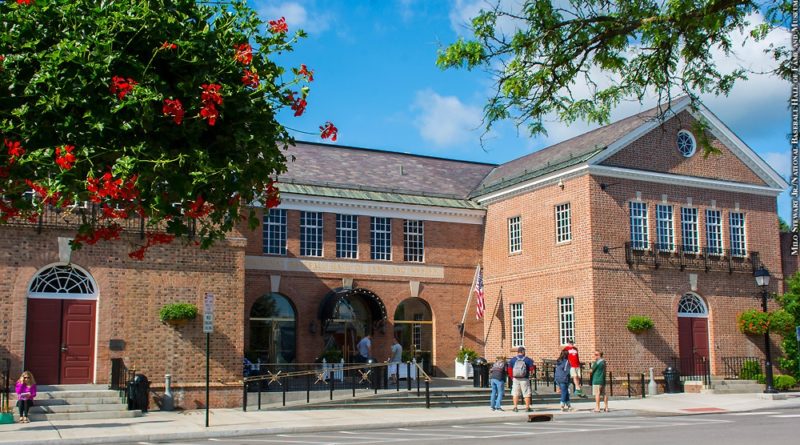
While the amateur draft is the bridge between the two All-Star games, it is the combination of the three events that leads to the eventual destination — 25 Main Street, Zip Code 13326. That address is the heart and soul of this picturesque village in North Central New York State — home of the National Baseball Hall of Fame and Museum.
By my conservative estimation I’m guessing more than a dozen players involved one way or another this past week will make it to that address. In fact, I’ll guarantee it — not that anyone will be able to call me on it.
The festivities from earlier in the week will provide an interlude to the regular schedule, which will resume but not distract from festivities surrounding induction of the Hall of Fame Class of 2022. Wrapping two All-Star games, the amateur draft, and the annual Hall of Fame ceremony makes for a glorious celebratory week — but is also probably a logistical nightmare that will most likely prevent an annual occurrence.
For the record, this was the 57th amateur draft and only 45 of the thousands who have been drafted since its inception in 1965 have made their way to Cooperstown. Since 1995 is the most recent draft to produce a Hall of Famer (Roy Halladay), that means only 31 classes have been represented to date, an average of less than one and a half per year.
And if you want to predict who might be a representative of the 2022 class, you’d have a better chance if you eliminated first rounders. Of those 45 “draftees” who have been enshrined, only 15 came in the first round.
The irony of the 2022 HOF class that will be honored here on Sunday, July 24, is that this will be the first induction since 1995 that won’t include a player who went through the amateur draft. David Ortiz, Tony Oliva and Minnie Minoso were international signees, while Bud Fowler was a product of the Negro Leagues, and Jim Kaat and Gil Hodges were signed before the draft was established.
* * *
“When in doubt, take the shortstop” has been a long standing guideline when trying to evaluate players for the amateur draft. The Orioles, under general manager Mike Elias, have expanded that formula to include all players positioned in the middle of the field — and let the pitching work itself out.
It’s a tactic that goes against the “grow the arms and buy the bats” theory once followed by the Orioles and still in place among many, if not most, MLB teams. It’s a strategy, which Elias helped to initiate, that has served the Houston Astros well during the last half-dozen seasons — and continues to do so.
The Astros stocked their system with quality middle of the diamond players and then completed their “rebuild” by trading for powerful arms (Justin Verlander, Gerrit Cole). The Orioles appear headed down the same path.
After starting with catcher Adley Rutschman in 2019, Elias has used the last four drafts to stockpile centerfielders and middle infielders. The Orioles do have a couple of potential front-line starters (DL Hall, Grayson Rodriguez) left over from the previous drafts, but for the most part Elias has been content to rely on the “secret sauce” approach to the pitching staff.
Going into the season, and even after working through a 46-46 start, starting pitching has remained the club’s biggest question mark, while the staff’s overall performance has been an unexpected strength. While some might still question the overall strategy, particularly the absence of pitchers in the amateur draft, it’s difficult to deny that it has worked — at least to this extent.
With the team limited to 13 pitchers on any given day, a total of nine (Jordan Lyles, Jorge Lopez, Tyler Wells, Kyle Bradish, Spenser Watkins, Joey Krehbiel, Cionel Perez, Bryan Baker and Austin Voth) have been acquired on Elias’ watch. It’s an unconventional approach some refer to as a first-aid treatment, and some question its sustainability, but for now at least, the band-aids are holding up like duct tape.
In the meantime, the stockpile of middle of the field players continues, the surest sign that trade winds will be blowing — sooner and later.
Jim Henneman can be reached at JimH@pressboxonline.com
Photo Credit: Milo Stewart Jr./National Baseball Hall of Fame and Museum