
You may have heard your uncle say something along the lines of, “Well, if they’re going to be getting my money, I shouldn’t have to pay for my tickets.”
The usage of public money for professional sports teams is a topic more complicated than Avril Lavigne’s personal life in 2002. Sentiment is growing nationwide that sports teams should not be given any public money at all, as evidenced by recent election results in places like Kansas City, Miss., and Tempe, Ariz.
That debate is both quite relevant and, in the case of Maryland, not relevant at all. The decision has been made in Maryland. As we know, the Orioles and Ravens are receiving $600 million each in public money as part of the respective lease agreements they reached with the state. Arguing about the decision is moot. The teams (and the stadiums) are getting the money.
I appreciated Gov. Wes Moore sitting down with us for this month’s cover story. I’ve had a number of opportunities to converse with the governor and find him quite affable and tremendously thoughtful. Given that PressBox is a sports publication, our conversation was always going to be sports-centric. That’s what we do here. But the issue of public money for private institutions is far more relevant than our typical boilerplate “what should the Orioles do at the trade deadline” fare.
Your uncle isn’t going to get free tickets. But as crazy as he might be, he has a point. Public money should result in a greater partnership between the entity and the community. While such a commitment shouldn’t allow taxpayers the right to call plays or make pitching decisions, it should reflect that the stadiums have a community role beyond just the games that are played there.
Admittedly, I asked Gov. Moore the question in our story about whether the commitment of public money should lead to more community opportunity at the facilities. I appreciated his affirmation. It guarantees nothing and there is no specific game plan for how many dates and events should be available for other usage, but it should be simple to state this at least generically. If more than a billion dollars of public money is going to the facilities, the facilities should be more available to the public.
There are multiple ways this can be represented. One is the broader role the stadiums play within the community. The more events the stadiums host and the more usage they get on non-game days, the better it is for the surrounding businesses. More people go to restaurants, hotels, axe-throwing venues and the like. It’s not just businesses that benefit, either. It’s helpful for the overall vibrancy of the city. There are more people outside, and that can increase the sense of safety someone feels being downtown as well.
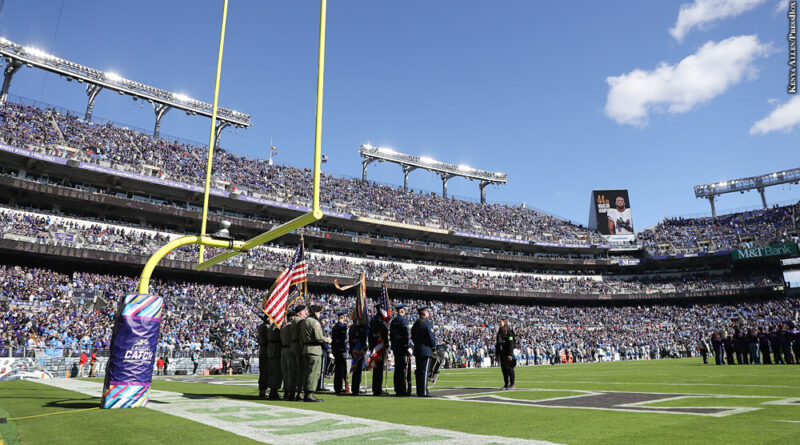
But more specifically, that partnership can be evident in more opportunities created for the community to use the facilities. M&T Bank Stadium was once home to the MPSSAA football title games and could be again. Unlike major college football games — which we’re all in favor of — these games aren’t significant moneymakers. But they allow for a community touch and give kids the opportunity to live out a dream of playing on the field where their heroes play.
The same could be said for other high school sports championships for both boys and girls. And if the NFL schedule does not allow for it to become a permanent home again, there’s no reason why — after the schedule is announced — the team couldn’t work with area schools to find ways to allow for more games to be played at the stadium during the course of the season.
And it’s not unique to M&T Bank Stadium, of course. Camden Yards has hosted both college and high school baseball games, and that should be a priority as well. But non-sporting community events should continue to be a significant part of these plans as well.
None of this is meant to criticize the teams for how the facilities have been used to this point. It’s just a request that this partnership continue to grow and allow an even more significant impact after renovations are complete. Perhaps offering all public school students in the region the opportunity to tour the stadiums for free once per academic year would be an appropriate reflection of this.
Gov. Moore’s answer gives me confidence that this will be a priority for the Maryland Stadium Authority. I look forward to monitoring how deep this partnership grows in the next 30-ish years of the teams’ respective leases.
Photo Credit: Kenya Allen/PressBox
Originally published June 19, 2024