
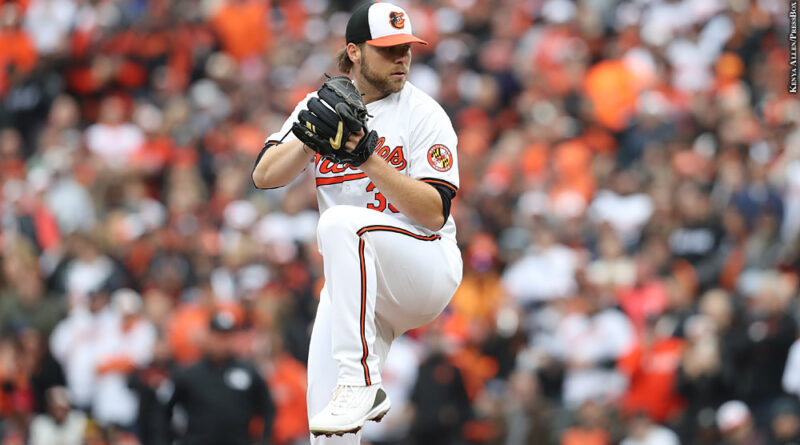
Perhaps we don’t know exactly what the Baltimore Orioles offered to try to keep Corbin Burnes around. But based on multiple reports, we can be pretty confident that the Orioles were not only competitive but prepared to make a historic, franchise-altering commitment to their free-agent ace.
So what exactly do we do with that?
My friend Ken Zalis posed that question a bit more pointedly Sunday, asking “so now what do the fickle fans think … lol.”
That question guided me to this column. What do I think?
The obvious answer is that there’s nothing to think at all. Whatever the Orioles offered, it wasn’t enough. It’s possible no number would have been enough because Burnes had decided that as long as the Diamondbacks offered a lot, he was going to stay home with his family. If that’s the case, does it much matter that the Orioles made a big offer?
Because if there’s a silver lining in all of this, it’s that for the first time ever, we have proof that the Orioles are willing to spend top dollar to land high-level baseball players. That has to matter to at least some extent. For everyone suggesting that the new ownership is no different than the old ownership, this development would seemingly shoot that down.
That has to matter, right? But let me keep working through this.
Was this money the Orioles were only willing to spend on Burnes? Was that because they got to know him and that made it different? Or is it money they were and are willing to spend in any prudent way to make the team better? Did they decide to make a big offer to Burnes only because he was the last significant starter left on the market and they were afraid of the optics of not getting one? Could that money have landed them, say, Max Fried instead?
I can’t fault the Orioles for losing Burnes if they did everything in their power and he simply chose otherwise. But I have no choice to fault them being in the pitching predicament that they find themselves in on Dec. 30.
I want it to matter that the Orioles are willing to spend big money on baseball players. That feels like a good thing! It feels like it should be bigger story! But I can’t shake the idea that such news would have been better in mid-November than late December. Are there even big-money players to spend on now?
OK, so to be fair, there are. But not THIS type of big money. The remaining players are the ones you thought the Orioles could be in on if they WEREN’T willing to spend major money. If the Orioles made this type of offer to Burnes but were rebuffed before Thanksgiving, we’d be thinking about how that money could turn into Blake Snell AND Nathan Eovaldi.
Jack Flaherty can’t make up for the loss of Burnes. That doesn’t mean the Orioles shouldn’t pursue Flaherty. And Nick Pivetta. And anyone else who can help. And explore trading for Dylan Cease or Bryce Miller. Trades require assets so such moves aren’t as desirable as signing Burnes would have been, but those additions undeniably would make this team better before Opening Day.
Still, this fan base is rightfully going to ask questions about Mike Elias’ “liftoff” and David Rubenstein’s “race to the finish line” until they see true changes. And that’s fair. Being willing to spend money seems good! But hypothetical never compares to practical. If the Orioles can make a reasonable trade for Cease and then convince him to take (the majority of) the money they tried to give Corbin Burnes, that’s the type of move that will legitimately change the opinions of the fan base.
Perspective remains important. The priority is winning a World Series. If the Orioles trade for Miller and he has a true ace season and the Orioles win the World Series, we will not care one bit that the difference-maker who put them over the top was a player making less than $1 million instead of one making more than $30 million.
So trading for Miller and signing Tanner Scott would be of interest. Or trading for Miller AND Cease and signing Pete Alonso to make up for losing Heston Kjerstad and/or Coby Mayo.
I’m glad the Orioles are apparently willing to spend money on baseball players. That’s objectively a good thing. But they’re still in the midst of an objectively real problem in trying to go from competitive to championship and that needs to be solved.
Photo Credit: Kenya Allen/PressBox