
OK, so I am feeling my oats a bit after it took Mike Macdonald just two years to win his first Super Bowl as a head coach. Hmmm, took a guy named Harbaugh a little longer than two years, and all told, he won one in 18 years.
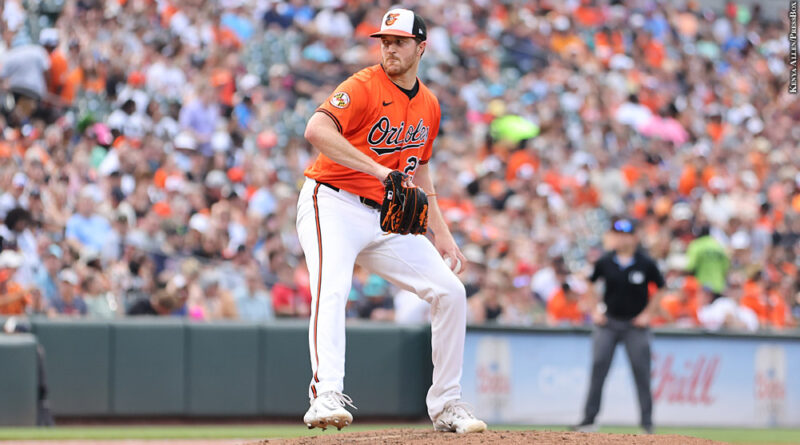
There is plenty I miss the mark on, but I stand by my column last August when I suggested to Orioles president of baseball operations Mike Elias that he extend Trevor Rogers before the start of the 2026 campaign.
At the time, I acknowledged there was risk for the team in doing so. But after what I saw out of Rogers in 2025 (18 starts, 109.2 innings, 1.81 ERA), I felt strongly that the Orioles’ bigger risk would be to allow the left-hander to simply play out his final year of arbitration eligibility. However, he told reporters in Sarasota that he hasn’t heard from the club about an extension.
If in 2026 Rogers is even 80 percent of what he was in 2025 and remains healthy all season — think 30-plus starts with an ERA hovering around 3.00 — he could command as much as $25 million per year on the open market next offseason, or whenever a new collective bargaining agreement is hammered out.
Remember, Rogers will pitch all of 2027 at the age of 29, and there are fewer innings on his odometer than most free-agent starters.
With last night’s signing of Chris Bassitt to a one-year, $18.5 million deal, Elias deserves a B+ for his overhaul of the ’25 team. This squad should be much more competitive in 2026.
There is still some awkwardness to the team’s bench if roster spots are truly going to Samuel Basallo, Coby Mayo, Ryan Mountcastle and Tyler O’Neill. The acquisition of infielder Blaze Alexander looks prescient, given the jolt of Jackson Holliday’s hamate break that will probably see him miss much of April.
But with much of Elias’ offseason being about reshaping his rotation without entering the dangerous waters of long-term deals on fragile arms, the Rogers extension I proposed back in August is probably already too low. In my opinion, the clock on the potential earnings of starting pitchers is always ticking — and the clock adds more dollars as it ticks.
I proposed buying out his final year of arbitration (now $6.2 million) and making that $8 million, with salaries of $10 million in ’27, $12 million in ’28 and $15 million in a club option for ’29 (with a $3 million buyout).
If Elias had aggressively pushed this in front of Rogers and his agents at PSI Sports Management, I think there was a chance he could have sold the player and his agent on this deal.
Now that costs have been allowed to escalate around the game, I would now attempt something like this before the ’26 season starts:
2026: $6.2 million
2027: $12.5 million
2028: $16.5 million
2029: $20 million
2030: $24.5 club option, with a $4.5 million buyout
That would guarantee Rogers nearly $60 million, with a chance for nearly $80 million if he makes it all the way through the deal.
Sure, the Orioles could get burned if Rogers reverts back to the 2024 version of himself. But if the Orioles do nothing, they’ll eventually just continue to search for less expensive versions of what they already had in the clubhouse.
I told the Ravens not to let Macdonald out of the building. I think I am still right about what to do with Rogers now.
Photo Credit: Kenya Allen/PressBox