
Sponsored Content
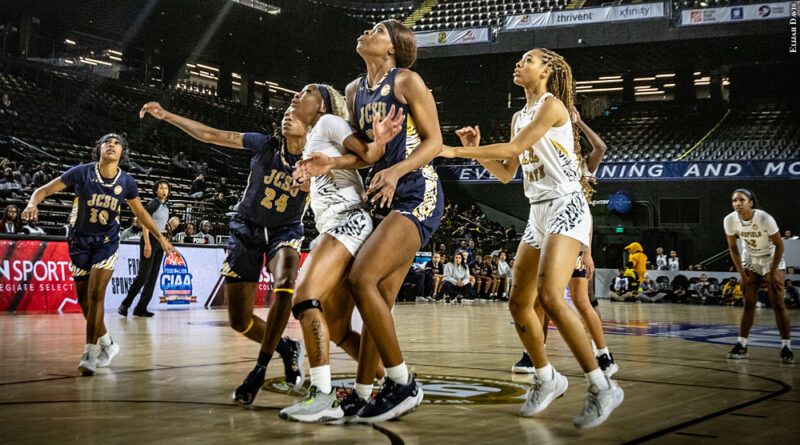
The Central Intercollegiate Athletic Association Men’s & Women’s Basketball Tournament has been held in Baltimore since 2022 and is returning to Charm City from Feb. 24-28.
The CIAA is a Division II conference that features 12 full-time members, including nearby Bowie State and 11 other historically Black colleges and universities that are scattered throughout Pennsylvania, West Virginia, Virginia, North Carolina and South Carolina. Founded in 1912, it is the oldest Black athletic conference in the United States.
Baltimore has seen a surge in economic advancement through the tournament, with February often seen as a dead period for tourism in the city. The CIAA Tournament has generated “$109 million in total economic impact for Baltimore” the last three years, according to Maryland Gov. Wes Moore in a CIAA press release. The tournament will remain in Baltimore through at least 2029.
Visit Baltimore interim president and CEO Kireem Swinton spoke with PressBox about the upcoming event and how it impacts the city.
This has been edited for content and clarity.
PressBox: How important is the CIAA Tournament to the people of Baltimore?
(Photo Credit: Erin Douglas)
Kireem Swinton: We’ve been hosting since ’22. [Before that], Charlotte had it for 15 years. It was a lot of pride in having CIAA there. But in terms of importance to us, we’re always excited because of what CIAA stands for. When you talk about the tournament, we truly feel like Baltimore aligns with what CIAA is all about, which is Black excellence and the achievement of these HBCUs. I wish there was something like this when I was growing up in the city where I could see professionals come in. I could also see basketball. I could see Black excellence move around.
It’s almost like a loving family reunion, if you will, with all the competition, but also cooperation with everyone to have one goal, which is to have a great time and support small businesses, Black-owned businesses in the city. And then for the youth to come in and be able to look at these schools or colleges that they have the opportunity to touch on and what the careers look like within them. But also adding the other things like a financial summit, tech house summit — things that matter to these young people right now in order to get them revved up and excited about HBCUs. Baltimore is the perfect place for it, but it’s also one where we’re going to put our arms around something like the CIAA because we need them, too.
PB: Why does the CIAA mean so much specifically to some of the local alums, particularly those from Bowie State and Lincoln University in Pennsylvania?
KS: Look, when it comes down to it, how often do you have a chance to continue to put money into the community where it’s directed toward these Black-owned businesses and small businesses? From 2022 to 2025, if you’re a person that came here through any of those years, you’ve directly impacted about $100 million in economic impact to our entire region and supported probably $10 million in our state and local tax revenue. If you’re local, that’s always helping our residents, which is good, right? [In] 2025 alone for the tournament, we generated about $27.4 million in economic impact, and that was $15 million in direct spend in Baltimore for over five days. Last year when you look at ’25, $1.15 million was spent on 92 minority-owned businesses across Baltimore. It’s about being intentional with your dollars and having an impact community for those who may have other opportunities and other spaces.
PB: What is your relationship with the CIAA personally?
KS: I take this very personal when you talk about being intentional about driving dollars into Black businesses within the city. I go around nationwide talking to people about being intentional with their dollars to help with these small Black-owned businesses and Black businesses that are in Baltimore. … From a personal standpoint, I followed CIAA when I was with Marriott Hotels. It was in Raleigh and then went to Charlotte when I moved there. And I had a lot of conversations behind the scenes on how to make sure that they were partnering well.
So for them to be in Baltimore now, I know how we need to partner, I know how we need to support and I know what it looks like to try and keep them happy and in a home that they feel like they really have a partner with, which is not just a piece of business for us. My job is to make sure that our community knows how important that partnership is and CIAA knows how important their partnership is, because at the end of the day we all want that economic impact with more jobs where people can get volunteers and people who get excited about going to HBCUs in the future. I think we need that.
PB: How can people get involved in the tournament?
KS: The games happening throughout the week include a lot of special community days, and we’re even hosting a night for our city churches. I would say there are a few things. One, the CIAA Career and Education Day that’s happening on [Wednesday, Feb. 25 is] a great way for our young students to come out and see what HBCU experience all is about and hear from employers. So that education day is one of the conference’s most popular events. It has reached about 6,000 students, and attendees can also participate virtually to meet college recruiters from Maryland, North Carolina, South Carolina, Pennsylvania and Virginia and learn tips to prepare them for college and offers an inside track to the collegiate experience.
And then throughout the week there’s a youth clinic. There are also opportunities to volunteer, but there’s a youth clinic on Saturday. On Thursday, there’s a health and wellness forum and then there’s a tech summit that happens on Friday and a Money Moves financial summit that happens on Saturday. And we’ve had so many students come in that have found future employment [and] future college experiences in schools that they never would have [had] before CIAA came here and they were able to join and be a part of it.
PB: How is the CIAA Tournament a showcase for Baltimore?
KS: As we are talking to a number of our customers, we utilize CIAA as well in order to bring other people in to show them what we’re able to do in the city of Baltimore. And then we also explain the new renaissance, the developments that will be coming in the future, things of that sort. So it builds a different mindset to sort of dispel some of the myths that could be out there about the city. I think it’s good, but in terms of numbers, I always look at data. Twenty-plus million people … came into the city of Baltimore last year for tourism — travelers that came in, visitors. And out of all of them, 80 percent also spent money in other parts of the state. So that means that when people are coming into the gateway, they’re going outside in order to spend money in other parts of the state.
Photo Credit: Elijah Davis
Issue 296: December 2025 / January 2026
Originally published Dec. 17, 2025