
The morning air during spring training carries a familiar mix of optimism and unfinished business.
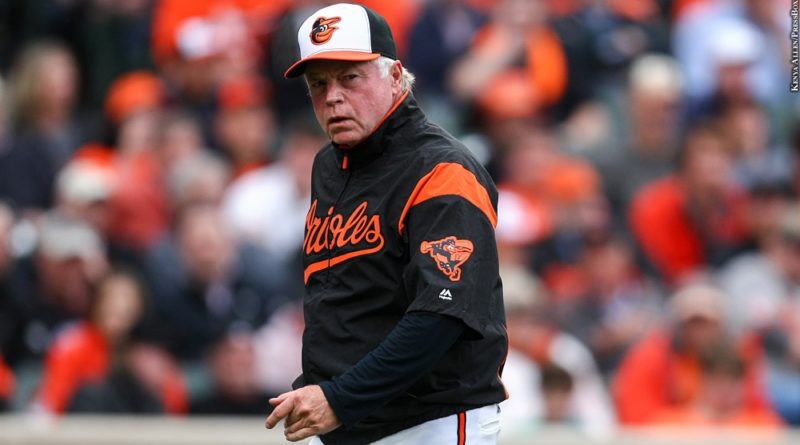
When former Orioles manager Buck Showalter joined Glenn Clark Radio on Feb. 18, he spoke less about roster intrigue and more about what happens inside the clubhouse when no one else is around.
For Showalter, accountability isn’t a slogan printed on the back of a spring training T-shirt. It’s daily behavior and understanding that every rep — even in February –matters.
“I get itchy for the good things, I really do,” Showalter said of reporting to Florida or Arizona for camp. “I love spring training. I love the pureness of it. I love the back fields early in the morning — the dew on the grass. I used to walk around the ballpark early in the morning with a cup of coffee — just take it all in. Spring training was special, before the reality of your weaknesses showed up.”
The comment wasn’t delivered as a warning, but as a matter-of-fact truth earned across decades in dugouts across Major League Baseball. Showalter has managed 22 big league seasons to the tune of a 1,727-1,665 record (.509). He has led five teams during his tenure — the New York Yankees, Arizona Diamondbacks, Texas Rangers and New York Mets in addition to his time in Baltimore.
Success followed structure. Showalter has won three division titles as a major league manager, guiding the Yankees to a division crown in 1994, the Diamondbacks in 1999 and the Orioles in 2014.
Showalter described how the foundation of a successful team is laid long before Opening Day. The standings in April and May, he suggested, often reflect the tone established in spring training.
“There’s not many secrets about spring training,” Showalter said. “When you’re around people seven days a week from sometimes 6:30 until dark, there’s not many things that are hidden. Those back fields, the way you go about things, I still kind of cringe when I see a team on Opening Day still not run a rundown properly. I go, ‘What were you doing down in spring training?'”
Showalter also stressed that leadership doesn’t just originate in the manager’s office — it has to grow organically within the clubhouse. Veteran players establish the tone and expectations, then younger teammates buy in and help uphold that same standard. A good example is Steve Pearce, the former Orioles outfielder and first baseman who spent parts of five seasons in Baltimore.
“There’s no algorithm or analytic to evaluate Steve Pearce off the field or the other stuff,” he said. “I’ll give you an example. ‘Steve, Jon Schoop’s down for a day or so. He’s having some tests. Have you ever played second base?’ He goes, ‘No, but give me about an hour in BP and I’ll be ready.’ And he played second base for one night, turned a double play. The morale boost that gives a team … you love getting things about players that other people don’t get.”
Spring training carries a certain type of weight for Showalter — a reminder of why he fell in love with the game in the first place. Long before the grind of a 162-game season sets in, before scouting reports are dissected and roster decisions grow urgent, there’s a brief window when baseball feels untouched and full of possibility. The mornings are quieter, the expectations lighter, and the game returns to its simplest form.
Still, Showalter acknowledged that adversity is inevitable. Slumps will happen. Injuries will test depth. Media scrutiny will intensify during losing streaks. A team’s shortcomings will be exposed.
“They’re all going to show up in a baseball season,” Showalter said.
For more from Showalter, listen to the full interview here:
Photo Credit: Kenya Allen/PressBox