
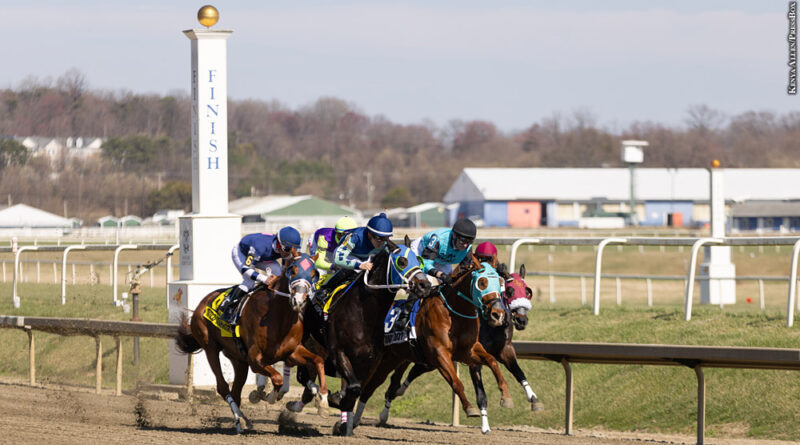
For the more than 134,000 fans at Pimlico Race Course in 2018, the 143rd running of the Preakness Stakes had a spectral quality as the field of eight thoroughbreds galloped through an eerie fog that had engulfed the track.
But the crowd’s forbearance was worth it. They were witnesses to Justify — an imposing, almost hulking, chestnut colt — holding off a handful of challengers and taking a step toward capturing the Triple Crown, for the moment the most recent sweep of horse racing’s ultimate achievement.
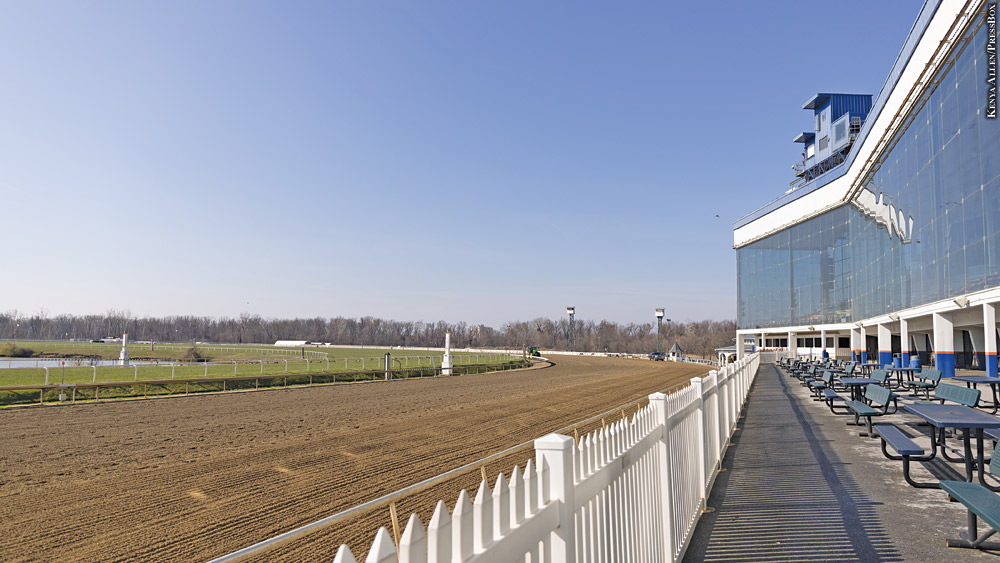
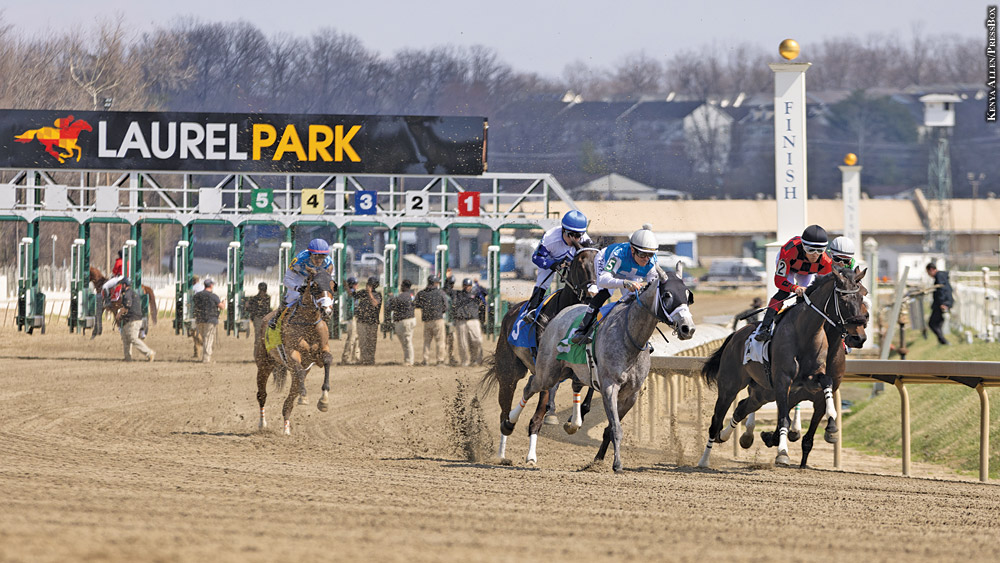
When the next Preakness field leaves the starting gate on May 16, 2026, the race itself may be similarly thrilling but the experience will be decidedly different. There will be no Pimlico. That sports cathedral, like so many others, has been reduced to rubble. And the Preakness’ temporary home for this year, cozy Laurel Park, will have a capacity of just 4,800. It will be a first step in a newly imagined Pimlico and its signature race, the Preakness.
As recently as 2017, the race set an all-time on-site attendance record with a throng of more than 140,000 as Cloud Computing dashed to the Pimlico winner’s circle. But the COVID year of 2020 marked a rapid decline in several regards for Pimlico and the Preakness. The race in 2020 was moved to October and there was no live attendance. Then, part of the grandstand seating was declared unusable over safety concerns. And by last year, the Preakness — suffering from a shabby Pimlico facility — drew a little more than 46,000 spectators.
With the physical state of Pimlico in obvious decline and concern about the future of the Preakness remaining in Baltimore a chronic worry, Maryland’s state government stepped in and assembled a plan that has the state’s major horse-racing facilities — Pimlico Race Course and Laurel Park — switching from corporate ownership to the oversight of the Maryland Stadium Authority. Racing operations will be under a new non-profit with a familiar name, The Maryland Jockey Club, Inc.
The recent facility owner, 1/ST (pronounced “first”), is relinquishing that role when final negotiations are completed. However, 1/ST will retain ownership of the Preakness Stakes and will license the brand in return for a flat fee and a percentage of wagering proceeds.
(Photo Credit: Kenya Allen/PressBox)
The Financial Picture
Since the first Preakness in 1873, there have been a cluster of exhilarating moments in Baltimore’s racing history. However, the 2010s cumulatively were a high-water mark for Pimlico and the Preakness in the past 45 years. Along with the 2017 attendance record, the Preakness boasted Triple Crown winners American Pharoah (2015) and Justify (2018). The 2019 Preakness, won by War of Will, from a robust field of 13 starters, had an all-sources handle of nearly $100 million.
However, the track where all that happened — Old Hilltop, as Pimlico has been affectionately known — was demolished in 2025 to make way for a new Pimlico, which is scheduled for a 2027 soft opening for the running of what will be the 152nd Preakness, albeit with no clubhouse for spectators. The clubhouse is scheduled to come later.
The financial picture in a nutshell is this: With the money mainly coming from the state, almost $530 million has been set aside for an overall horse racing project that includes Pimlico and Laurel Park. Laurel will be a training facility that houses an estimated 1,100 horses, as well as providing for the training staff, grooms, riders and other workers needed to ultimately support about 130 racing days every year. Those horses at Laurel will be shipped to Pimlico, which will become, in the vernacular of the industry, a “ship-in” race track.
The Laurel Park version of the Preakness is also slated to be the swan song for 1/ST’s direct ongoing involvement in Maryland thoroughbred racing, with the new Maryland Jockey Club taking the reins after that.
The state has purchased Pimlico from 1/ST for just $1 but, of course, was left with the task of razing it and building a new track. Laurel Park, which has also been owned by 1/ST, is being purchased by the Maryland Stadium Authority for a reported $50 million.
The Stadium Authority, which also has oversight for Oriole Park at Camden Yards and M&T Bank Stadium as well as other venues, plans to make Laurel a top-notch training facility for about an additional $70 million to $80 million. Those Laurel expenditures for both purchase and improvements will leave about $400 million to build the new Pimlico.
At the heart of all this effort to save horse racing is avoiding a repeat of a Baltimore sports debacle of 42 years ago when the owner of the Baltimore Colts moved the NFL team in the dead of night to Indianapolis. Fortunately, the Ravens, transplanted from Cleveland, have filled that void but losing the Preakness — which has been an ongoing worry — would deal horrible psychological and economic blows to Baltimore and Maryland.
“The city and the community [where Pimlico is located], Park Heights and the surrounding areas, are so passionate about the racetrack and its greatness,” said Bill Knauf, a racing industry veteran who is the president of the new Maryland Jockey Club, Inc. “It’s theirs, right? They feel like it’s theirs, which is great to see from a community.
“With all the history of the races that have been at Pimlico, the Preakness is in the right spot. Laurel’s a good place for a year and Laurel’s a beautiful facility, and people are going to find that out this year, but the Preakness is home at Pimlico.”
“Almost A No-Brainer”
Tied to the effort to re-establish Pimlico and its centerpiece event, the Preakness, is the health, even survival, of Maryland’s horse industry itself.
An American Horse Council survey released in 2024 found that the economic impact of the horse industry in the state is nearly $3 billion, with almost 22,000 people directly employed. Of the 94,000 horses in the state, more than 37,000 are Thoroughbreds. Much of that would be jeopardized without an ongoing racing enterprise and the spotlight that the Preakness Stakes provides on the third Saturday in May every year.
Cricket Goodall, executive director of the Maryland Horse Breeders Association, points out that Maryland has more horses per square mile than any other state in the country.
“Horses provide both job opportunities and the environmentally beneficial green space that are essential to Maryland’s productive future,” Goodall said in a news release detailing the survey’s findings.
So, when the question is raised about the value of spending the money and making the considerable effort to save racing in Maryland, Craig Thompson, the chairman of the Maryland Stadium Authority, frames it this way.
“I’ll start by saying the opposite — what if we don’t? What are the risks of not putting in the work to not just enhance and generate the economy in Baltimore City and the state, but also continue working on making sure that the industry is as great as it can be and as profitable as it can be,” Thompson said.
“I think that it’s almost a no-brainer from an economic development standpoint as long as people are supportive of the racing industry and all the ancillary events that are part of the product. I do think there are opportunities to really, really generate a lot of interest [in the sport] in new people.”
(Photo Credit: Kenya Allen/PressBox)
Back To The Drawing Board
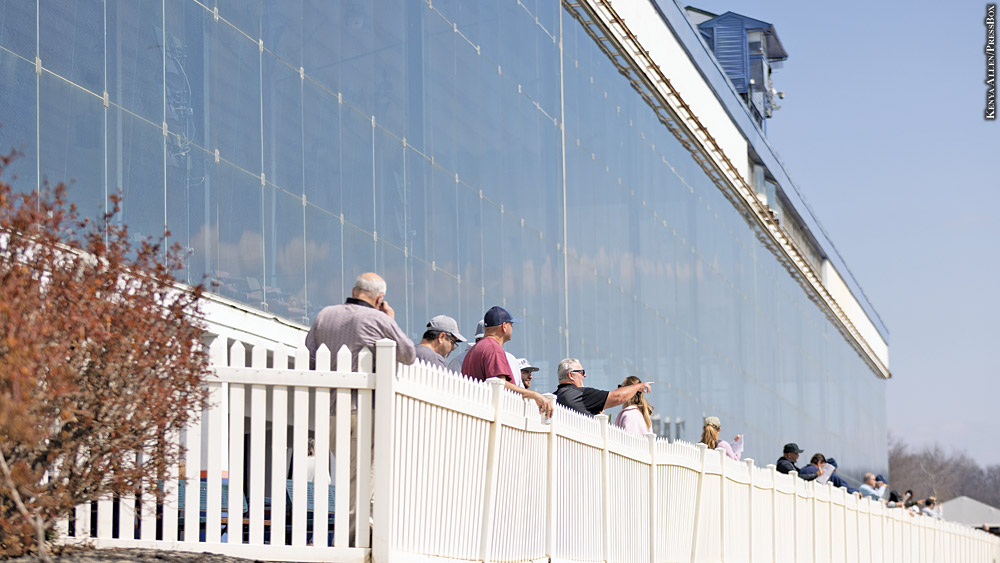
There is much about what the new Pimlico will look like that is quite literally still on the drawing board, but far more certain is what the Preakness will be in 2026. Capacity is limited to 4,800 spectators and tickets sold fast as soon as they were offered, even though the fans in many seats will be watching the race on television.
A positive for ticket purchasers is that a ticket to the Preakness is also good for the preceding day, known as Black-Eyed Susan Day, when fillies and mares dominate the race card. In previous years, fans bought admissions for the Preakness and the Black-Eyed Susan separately.
For the 2026 Preakness, organizers will be relying heavily on what is referred to as “overlay” — sturdy temporary hospitality accommodations for watching the race as well as providing food and beverage.
Overlay is extremely common for a variety of massive events from major golf tournaments to the Olympics. It will be a key component in the future at Pimlico when the new track has to transition from handling crowds of just several thousand fans on a normal race day to handling tens of thousands for the Preakness and the Black-Eyed Susan.
Throughout the years, a number of proposals have been offered for what a new Pimlico should look like, including rearranging the orientation of the track itself. So far, the tracks themselves in the current plans, both the turf and the dirt tracks, will remain the same. The Preakness is run over 1 3/16 miles.
Mike Pons, co-owner of two Maryland Thoroughbred farms, Country Life in Harford County and Merryland in Baltimore County, was an advocate for keeping the tracks the same. He highlighted legendary horses Man o’ War (1920) and Secretariat (1973) as having passed through Pimlico.
“That’s all the history in every record that’s been set,” said Pons, who previously served as president of the Maryland Horse Breeders Association. “… If you tear it up and reconfigure it and change directions and all that, you might as well be anywhere else besides Pimlico because it doesn’t matter.”
Looking ahead to 2027 when the race will be back on the Pimlico track, capacity is still undetermined. The new clubhouse won’t be completed, and again, overlay will be part of accommodating on-site spectators. Quite likely there will be seating and food and beverage in the Pimlico infield and perhaps outside the rail, if that’s at all possible given the construction.
An Effort Baltimore Deserves
What is more certain is that the daily racing calendar in 2027, both before and after the Preakness itself, will be taking place at Laurel, even as that facility undergoes its own overhaul to become the permanent training facility that will eventually be shipping horses to Pimlico starting in 2028.
It is hoped that much of the infrastructure for the new Pimlico will be in place by May 2027.
“The focus is to get all the equine components back together, which would include a new tunnel [from outside the rail to the infield], which is vehicular and pedestrian,” said Gary McGuigan, the Stadium Authority vice president who is overseeing the bricks-and-mortar components.
Previously, a tunnel allowed people to make their way to Pimlico’s expansive infield.
“So, there will be a second tunnel, big enough for a tractor trailer. And basically, have everything complete except for the clubhouse,” McGuigan explained.
If all goes according to plan, the new Pimlico should be ready for full-time service in 2028.
“I really do believe we’re going to create a best-in-class sports facility,” said Thompson, the chairman of the MSA. “I know that the folks are working very, very hard to do it. And I feel confident that we can.”
Knauf, who was most recently at Monmouth Park in New Jersey as vice president of business development, envisions a new Pimlico that combines the feel of tradition with the amenities spectators have come to expect in a 21st century sports venue.
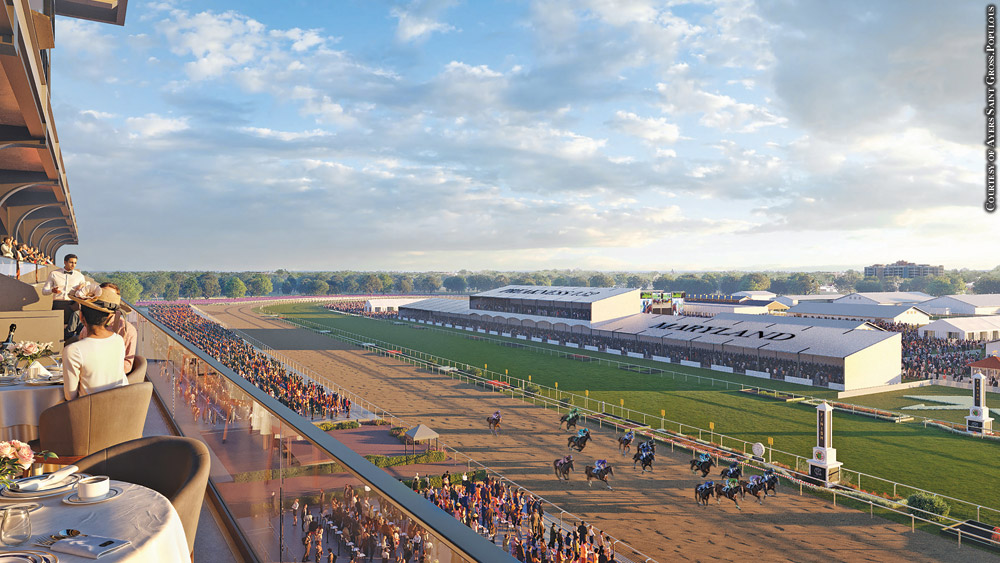
“What I’ve seen so far is a Pimlico clubhouse which is very classic, even grandiose-looking, with a lot of arched windows,” Knauf said. “… I’m a huge fan of history and we’re seeing history reincarnated. People will appreciate a building that has modern amenities but has a classic look to it.”
Plus, outside of the building, fans will be able to experience more open space than they have seen before, Knauf added.
Quite possibly, the new Pimlico will include an outdoor paddock where spectators will be able to see the race horses walked before they head to the track.
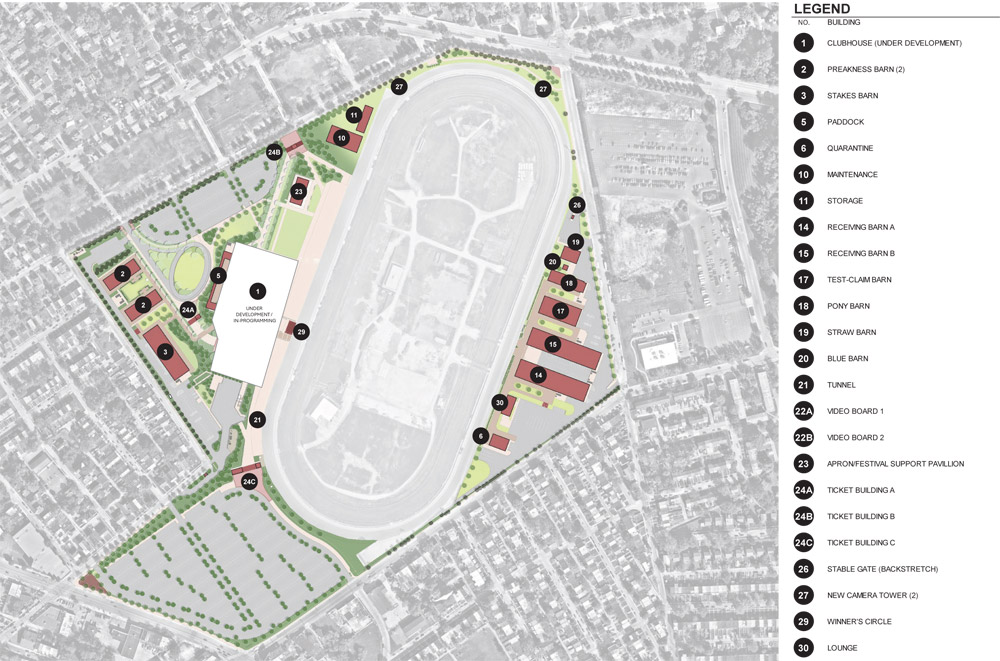
Much like the actual building itself, Pimlico’s relationship to the Northwest Baltimore neighborhood in which it stands is still taking shape.
“There are provisions in the legislation [regarding Pimlico] for funds to go to development in the Park Heights community for the purchase of certain parcels to be determined, such that there will be opportunities for business and entrepreneurship and community revitalization,” Thompson said. “And we’ve worked very hard and closely with the Pimlico Community Advisory Board as well as the Park Heights Renaissance group and making sure that the leadership in the Park Heights area are engaged and involved in what we are working on.”
The constituencies are many and the tasks at hand complex. But preserving a time-honored sports institution, the Preakness, while also reinventing that institution’s timeworn home, Pimlico, is an effort that Baltimore believes it deserves.
Photo Credits: Kenya Allen/PressBox