
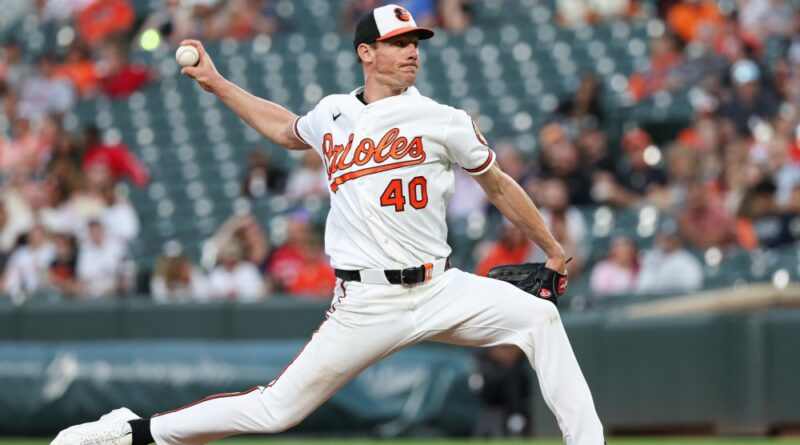
Chris Bassitt could go about his day without feeling any pain. He could throw on flat ground without issue. But every fifth day, when he stepped onto a mound, something changed.
After managing the issue since mid-April, the veteran right-hander finally underwent a procedure to remove a bone spur in his back, ending months of trying to pitch through an injury that rarely impacted him outside of game action.
It wasn’t until the injury began altering his movement — and, ultimately, his performance — on the mound that surgery became the clear choice.
Bassitt posted a 5.27 ERA in 12 appearances before landing on the injured list on June 8, a far cry from his 3.71 career mark, a downturn he stresses was influenced by the bone spur compromising his mechanics.
“That was the worst thing. I felt great on a day-to-day basis,” Bassitt said. “I felt great throwing on a flat surface. It was literally just throwing on the mound that created the issues that I had.”
Bassitt initially believed he was dealing with nothing more than an oblique strain. He managed the discomfort for nearly two months, hoping he could simply pitch through it.
But despite feeling normal away from the mound, the issue continued to limit his movement whenever he pitched.
“It just felt like a random oblique strain,” Bassitt said. “Just like side tightness, side stiffness, pain through my oblique. And then all of a sudden it just got to a point where it was like, ‘We can’t work through this.'”
Bassitt said the procedure itself was relatively straightforward. Ultimately, the decision to go under the knife wasn’t simply about eliminating discomfort. It was about recognizing that he wasn’t giving the Orioles his best.
Bassitt’s understanding is that surgeons simply removed the bone spur, leaving him to focus less on a lengthy rehabilitation process and more on allowing the incision to heal before beginning his throwing progression.
“As long as the results were there, I would still have been throwing,” Bassitt said. “But the reality is the results weren’t there. That bone spur was compromising my movement. It was compromising my right side. It was one of those things where I know I’m not doing well for the team. I’m not helping anybody out when I’m on the field. We’ve got to get this fixed.”
Rather than simply waiting for his body to heal, Bassitt has used the time away to stay engaged with the parts of pitching that don’t require him to throw. The 37-year-old has remained involved through film study, data analysis and analyzing the Orioles’ opponents.
Bassitt has committed much of his time to evaluating opposing hitters, understanding the Orioles’ defensive alignments and offering insight from a perspective that comes with nearly a decade of major league experience.
“I understand their defensive stuff, and I understand what they’re going through,” Bassitt said. “I can grade them, so to speak, [on] what they’re doing.”
For a pitcher accustomed to controlling every aspect of his preparation between starts, the biggest adjustment hasn’t necessarily been finding ways to stay busy. It’s been finding ways to help while waiting for the opportunity to take the mound again.
Bassitt’s recovery timeline will be determined by how his body responds as he progresses through his throwing program, but the procedure gave him confidence that he addressed the issue that had been limiting him for months.
After spending much of the first half trying to pitch through an injury he couldn’t fully escape, Bassitt can now focus on rebuilding toward a return — without having to wonder whether the next mound appearance will bring the same discomfort that forced him away.
Photo Credit: Courtesy of the Baltimore Orioles