
Orioles right-hander Craig Kimbrel has pitched for eight major league teams across 15 seasons, and as such, he’s crossed paths with a lot of players.
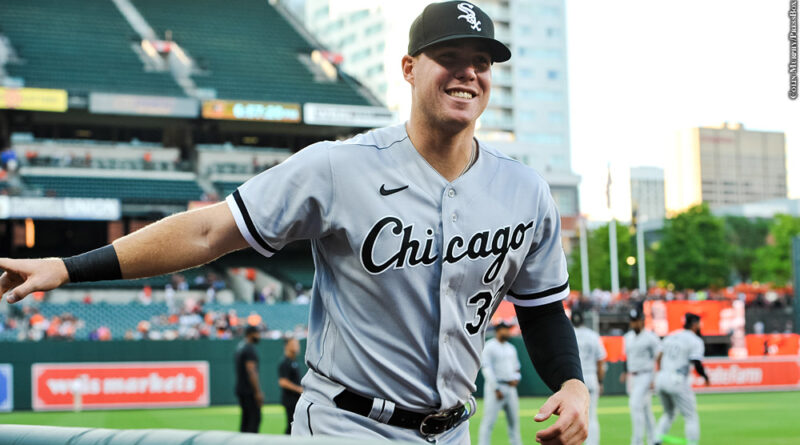
One of them is White Sox outfielder and first baseman Gavin Sheets, the Lutherville native and Gilman graduate who has spent parts of the past four seasons in Chicago. He made his big league debut in 2021, and Kimbrel pitched 23 innings for the team late that season.
Sheets enjoyed his time with Kimbrel, now the Orioles’ closer.
“First off, he’s an unbelievable teammate, unbelievable person,” Sheets said on Glenn Clark Radio May 23. “When you match that with a guy that’s going to be a Hall of Famer and the stuff that he has, it’s a great combination. The way he goes about his work and the way he cares about what he does, it’s fun to watch from afar. We had him for the last two months of the season and in the playoffs. Just an unbelievable guy and really fun to just see the way he goes about his business, a guy that I’m definitely going to tell my kids that I played with.”
Kimbrel, sixth on the all-time saves list with 427, ran into some trouble this season with the Orioles before bouncing back. During a five-appearance stretch from April 26 to May 8, he converted just one of five save opportunities (though he was credited with two blown saves and two holds). The command of his fastball and knuckle-curve deserted him as he worked through some upper back tightness, walking seven hitters during that stretch.
Since then, Kimbrel has bounced back with five consecutive scoreless outings. The 6-foot, 215-pound right-hander has a 3.50 ERA with 27 strikeouts in 18.0 innings along with 10 saves this year.
Sheets isn’t surprised Kimbrel’s struggles were temporary.
“If he had a bad outing, he never showed it. The next day he was right back at it with a smile on his face, and that’s why he’s had so much success in the closer role,” Sheets said. “There’s a lot of different roles where you can have a bad night and not many people really know about it, but obviously if you have a bad night as a closer the game’s over. I feel like to have the amount of success that he’s had, you have to have a short-term memory. A guy that’s going to have a Hall of Fame career, he knows how to handle that stuff.”
Sheets touched on a few other topics, including …
On how he stays focused during a down year for the White Sox:
“Coming up in ’21, my rookie year, I got to be a part of a team that was 15 games up in the division and ended up going to the playoffs, so I’ve kind of seen the good, the bad and the ugly. Obviously you just have to take it game by game, keep the same focus every night no matter what your record is and every night you’ve got to try to find a way to win that game. I think when you keep it in that short term and stay in the present, you kind of stray away from thinking about what your record is. It’s a long season. You can’t give up. Especially in the big leagues, you can’t let your record affect the way you play.”
On the adjustments necessary to play mostly right field:
“I think the biggest thing was just the reads off the bat, that first step. When initially you get out there, everything you do is kind of hesitant. The reads right off the bat aren’t initially as good as you want them to be. You’re just kind of backing up on balls that are coming in front of you, so over time you learn if the guy topspun it, if he backspun it, if he hammered it, if he got jammed. I think that has been the biggest thing, just getting the first-step quickness and trying to get the reads as quick as possible off the bat and kind of going for it.”
On why aggressive approaches are more in vogue across baseball:
“I think more than anything it’s that guys’ stuff nowadays you need three swings off of. The longer you get into an at-bat, the more likely you are to strike out. That’s just the way our game is nowadays. Starters are throwing 98, 99 like [Grayson Rodriguez and Corbin Burnes]. You can’t go up against Burnes and those guys and just say, ‘Hey, I’m going to take a couple pitches and work a deep count,’ because as soon as that, he’s 0-2 and you’re striking out. I think more than anything, guys have to be more aggressive now. If you get your pitch 0-0, you’ve got to take advantage of it because that could be the only one you get that’s worth hitting. I think it’s a little bit of both. You can definitely pick some guys to work your walks off of, but there’s a lot of guys that you get in there late in the game, late relievers, you’ve got to get your good swings off of them early.”
For more from Sheets, listen to the full interview here:
Photo Credit: Colin Murphy/PressBox