
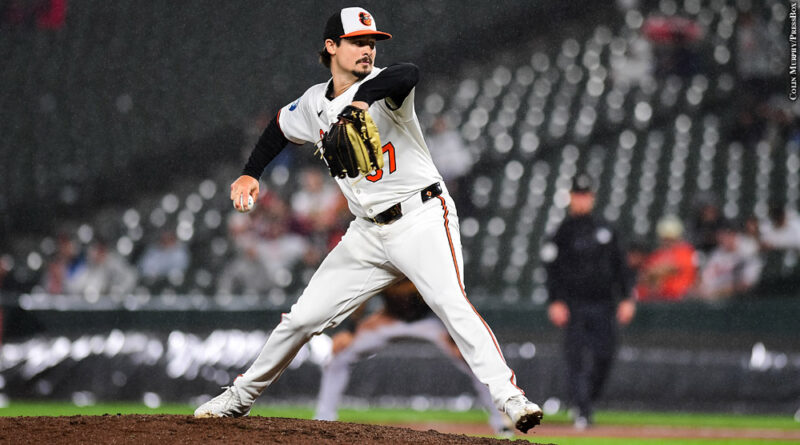
Kade Strowd spent parts of six seasons in the minor leagues, not including a non-existent 2020 campaign as COVID took away a full minor league season. Strowd finally reached the majors in May, six years after he was drafted, but he was optioned right after. The same happened at the end of June.
However, Strowd’s latest recall may be the last. He dazzled after returning to the Orioles in the final week of July and looks like a pivotal piece for Baltimore’s bullpen in 2026.
“All I’ve ever heard about him from our pitching people is how nasty the stuff is,” interim manager Tony Mansolino said. “I think the numbers kind of back that up right now. And obviously the eye test as well.”
Strowd made three appearances during his first two stints in the majors, allowing three runs in 4.1 innings. Five batters reached. Strowd struggled with his command, especially during his debut on May 18. He fell behind in the count against each of the first three hitters against the Nationals.
In 213.1 innings in the minors, Strowd had a 1.46 WHIP and walked more than four batters per nine innings.
But that all changed in Strowd’s return to the Orioles. All but three of his final 22 appearances were scoreless, and in nine of them he didn’t allow a baserunner.
“I’ve done a pretty good job of getting ahead of guys,” Strowd said before the end of the season. “I’ve got a pretty good feel for everything right now. I feel pretty confident throwing anything in any count.”
Strowd’s success resulted in higher-leverage outings. Each of his first five appearances came in blowouts. Then, he recorded four outs against the Blue Jays on July 30, with the entire eighth inning coming in a one-run game. Two outings later, he secured his first career hold.
Strowd added four more holds in the final month of the season. Five of his six high-leverage outings came in September.
“At the end of the day throwing up a zero is throwing up a zero,” Strowd said. “The top of the lineup, the middle of the lineup, the bottom of the lineup coming up, it doesn’t really matter.”
Relievers need to have the right demeanor, according to Mansolino. They can’t get sped up or be insecure or emotional, he said. He referred to Strowd’s demeanor as “fascinating.”
When Strowd stranded two runners with two outs in the eighth inning against the Pirates on Sept. 10 with a swinging strikeout, he calmly walked off the field, almost emotionless. He did the same one day later.
Strowd eventually showed he isn’t a robot, though, when he struck out the side against the Yankees on Sept. 21. After blowing a 96 mph fastball past Trent Grisham, Strowd took a couple steps before yelling and pumping his arms in exhilaration.
Mansolino said being a relief pitcher is a “really isolated job,” one that’s very volatile. The interim manager believed Strowd showed the ability to navigate through that.
“You have this weird trust in his calmness right now,” Mansolino said. “He’s been an exceptional story here post-trade deadline for me.”
Strowd’s basic stats — a 1.71 ERA with 24 strikeouts in 26.1 innings — are impressive. The advanced numbers show it’s not a fluke. Among pitchers with at least 50 batted balls against them, Strowd’s barrel percentage was second-best in the league and his ground ball rate was more than 14 percentage points higher than the big league average.
The 28-year-old doesn’t lack confidence, but he’s also aware of how the industry works. That’s why he has the right mentality to be an impactful piece for the Orioles’ 2026 bullpen.
“I knew there was going to be an opportunity eventually, but they can send you down just as easy as they called you up,” Strowd said. “Still got to go out there and pitch well and just seize every opportunity you can.”
Photo Credit: Colin Murphy/PressBox