
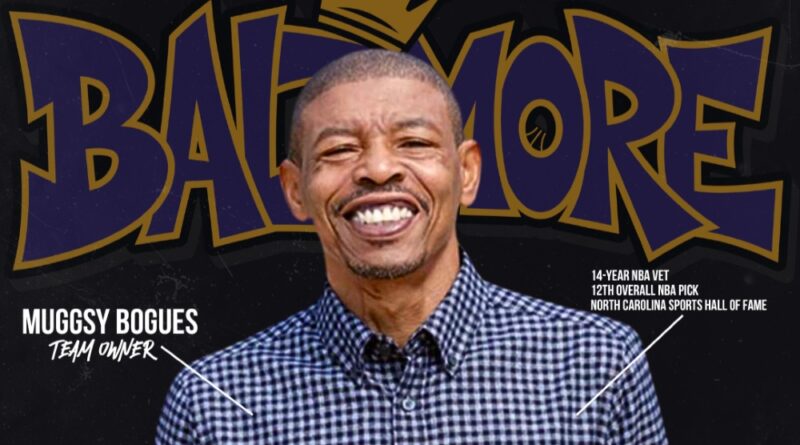
Muggsy Bogues learned what the game of basketball demanded long before the NBA. He remembers fighting for playing time in East Baltimore, where nothing was given and size was everything.
At 5-foot-3, he wasn’t supposed to last a possession, let alone a 14-year NBA career. Bogues became the shortest player in NBA history and forced the game to rethink who it could belong to. The NBA wasn’t supposed to be an option, but he made it one anyway.
“It all started as a kid,” Bogues said on Glenn Clark Radio April 10. “Trying to play with the big guys, but unfortunately they wouldn’t let me play so I had to create my own game by getting milk crates and cutting out the bottoms of the milk crates and getting some guys to play with me.”
That mindset never left him. It couldn’t. In Baltimore, especially in the Lafayette Court housing projects where Bogues was raised, nothing came easy.
“That’s where the nickname Muggsy developed,” he said. “Because I was mugging them — they couldn’t dribble the basketball up the court, they couldn’t do anything. They were so frustrated and pissed off. And being able to show them up and let them know that this game of basketball was meant for whoever had the ability to play it.”
You earned it, or you found another way.
“We started down at Lafayette projects. Of course we went up to The Dome. The Dome is where the mecca of basketball took place,” he said.
The Dome wasn’t just a court. It was an East Baltimore landmark where the city showed up. Baltimore basketball has long been defined by guards with a chip on their shoulder, players who had to put in a lot of work just to be seen. Bogues became the embodiment of that.
“My mindset is always if I play against the best, if I have success against the best, I should be included with the best,” he said.
That belief carried him from Baltimore to Wake Forest, then into his tenure in the NBA. Decades later, Bogues is still doing the same thing, except in a different role, returning to a version of the game that strips everything down to the individual.
When his friend Tracy McGrady called him about joining the Ones Basketball League, a 1-on-1 format built around individual matchups and city pride, Bogues didn’t hear a business pitch.
“He reached out to me and told me what his vision was,” Bogues said. “… I’m just so grateful and thankful for his vision but also being able to create this platform for these guys that continue to have that dream.”
The league, which launches its “Battle of the Cities” tournament in Orlando on May 15, is structured simply: Four players per team, one-on-one matchups, first to nine points and 10 seconds to shoot. Make or miss, possession flips.
“There’s a strategy that’s involved,” Bogues said. “So, you must be in tip-top shape in order to compete. You’ve only got 10 seconds. You’ve got to clear every time. You’ve got to not only have skill, but you also got to be in great shape.”
Bogues is the owner and general manager of Team Baltimore, but the title feels secondary to the mission. For Bogues, this isn’t about launching a powerhouse league. It’s about extending a pathway for the next group of local, talented hoopers.
“This is where it all started, where we all grew up. Mano a mano, one versus one,” he said. “Being able to continue to showcase their skill set, and continue that dream and that passion, and at the same time possibly put a couple dollars in their pocket, I’m so thrilled to be part of it.”
Baltimore is central to everything he’s building. Not just in name, but in identity. The players representing the city carry a sense of pride. Bogues’ four-man roster reflects development, resilience and growth.
“You’re absolutely representing your city,” Bogues said. “You’re going to pretty much put your city on your sleeve, on your chest, and you’re going to go showcase and represent the way you know how.”
Bogues is also proud of the rookie seasons Baltimore natives Derik Queen and Julian Reese put together in the NBA. Both had to leave the city to chase opportunity but never lost their foundation.
“These guys are representing the city well,” Bogues said. “DQ, that’s my guy. Ever since he’s been a kid, he’s been under my program … and look what happened, the results paid off.”
He sees the same hunger in them that once defined his own path, the same willingness to work without any handouts.
“Juju worked. That’s what it’s all about. Knowing your limitations, knowing what you need to work on, and he went in the gym and he got busy,” Bogues said. “Having the resiliency to push through it all and kept the focus and the mindset to become one of the best players he can possibly be of himself.”
For more from Bogues, listen to the full interview here:
Photo Credit: Courtesy of Ones Basketball League