
The key to any fantasy football season is preparation. Whether you have the first overall pick or the last of the first round, having a sense of who will be available in each round is key.
I’ll be doing mock drafts throughout the summer while offering scenarios and feedback for each position. The point of these mocks is to prepare for the unexpected.
The mock drafts will assume that 12 teams are in the league with the following roster construction: quarterback, two running backs, two wide receivers, tight end, a flex (running back, wide receiver or tight end) defense, kicker and seven bench spots. It is a 16-round snake draft in a half-point-per-reception (half-PPR) league.
If you read my draft guide, you know I’m not a fan of drafting kickers and defense if it’s not necessary. I’d rather add a few running backs who could end up being a starter in the event of an injury. However, for the sake of this exercise, I’ll round out each draft by doing so. Remember, do not draft either before your final two picks!
Most important of all, be creative with your mock drafts. Don’t take the same players in every mock. Your favorite sleeper is probably someone else’s too. I’m guilty of this myself — see Rashod Bateman — but I will try to go with different approaches in many of these mock drafts.
The draft is just the start of the season. If you are drafting early, work the waiver wire to your advantage if any major injuries arise. If you’re a fantasy nerd like me, turn on notifications from your favorite NFL insider for breaking news around the league. But the draft is where you build the foundation of your roster, and the goal is to have as deep a roster as possible.
This is a 16-team mock draft, and we will use pick No. 7 for this mock. (See also: No. 1 pick – 3 RBs, No. 1 pick – 2 RBs/1 WR, No. 2 pick, No. 3 pick, No. 4 pick, No. 5 pick, No. 6 pick) We’ll mix in 10-team drafts at some point as well as a Superflex, non-PPR draft and auction.
Let’s get started with the latest mock draft of the 2022 season.
Here is my roster:
Round 1, Pick 7: Najee Harris, RB, Pittsburgh Steelers
Round 2, Pick 10: Ezekiel Elliott, RB, Dallas Cowboys
Round 3, Pick 7: Michael Pittman, WR, Indianapolis Colts
Round 4, Pick 10: J.K. Dobbins, RB, Baltimore Ravens
Round 5, Pick 7: Jalen Hurts, QB, Philadelphia Eagles
Round 6, Pick 10: DeVonta Smith, WR, Philadelphia Eagles
Round 7, Pick 7: Melvin Gordon, RB, Denver Broncos
Round 8, Pick 10: Jakobi Meyers, WR, New England Patriots
Round 9, Pick 7: Zach Ertz, TE, Arizona Cardinals
Round 10, Pick 10: Kenyan Drake, RB, Las Vegas Raiders
Round 11, Pick 7: Marvin Jones, WR, Jacksonville Jaguars
Round 12, Pick 10: D’Ernest Johnson, RB, Cleveland Browns
Round 13, Pick 7: Trevor Lawrence, QB, Jacksonville Jaguars
Round 14, Pick 10: Brevin Jordan, TE, Houston Texans
Round 15, Pick 7: Justin Tucker, K, Baltimore Ravens
Round 16, Pick 10: Pittsburgh Steelers DST
Observations:
There is a different strategy to follow when you get into these larger-sized leagues. You won’t find much talent on the waiver wire, so having a second quarterback and tight end in the event of an injury is almost necessary. It’s also important to land your quarterback earlier than I typically would like because if there is an early run at the position and you get caught on the outside looking in, you’re going to be choosing between the leftovers.
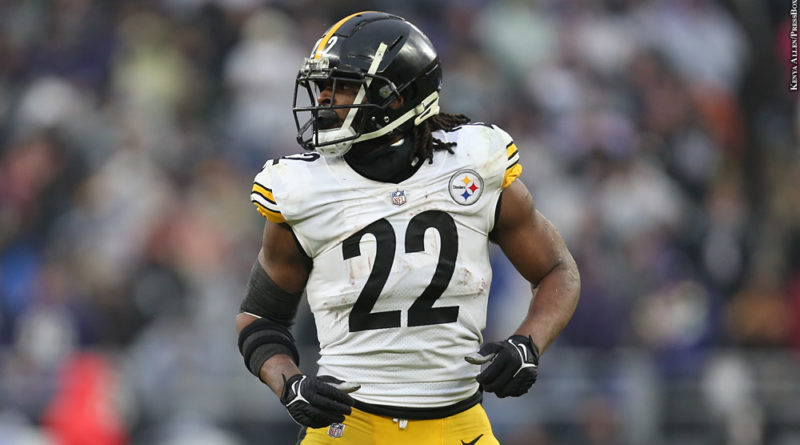
Landing Najee Harris with the seventh pick is an ideal start. He’s coming off a year in which he led the NFL touches, and it wouldn’t shock anyone if he does so again. He’s the perfect first-round pick because he contributes in both the run and pass game and is the unquestioned bell-cow for the Steelers.
Before the draft started, I had a gut feeling that I would be taking a receiver in the second round. I thought the running backs I’d be willing to take in Round 2 would all be snatched up. There was only one remaining, and it was Ezekiel Elliott. He struggled in the second half of last season, in large part due to a nagging knee injury, and yet, he still finished with over 1,000 yards rushing and 12 touchdowns.
Michael Pittman as my No. 1 receiver makes me very happy. He was getting a ridiculous 31 percent of the targets from Weeks 13-18 and gets an upgrade at quarterback with Matt Ryan running the Colts’ offense. The sky is the limit for Pittman this season.
I figured to be getting in the range where none of the true starting running backs would still be there, so I was thrilled to see J.K. Dobbins still available in the fourth round. He’s been activated off the Physically Unable to Perform list, and all indications are that he’ll be ready for Week 1. Even if he is not 100 percent out of the gate, he is going to get the bulk of the carries in the Ravens offense.
It might not have always looked pretty with Jalen Hurts, but from a fantasy perspective, there are few who offer that playmaking ability at the position. The dual-threat quarterback has a ton of weapons around him in addition to being able to generate points with his legs. I like his potential to finish as QB1 by the end of the season.
Speaking of weapons around Hurts, DeVonta Smith seems to be forgotten because of the offseason acquisition of A.J. Brown. Smith is a terrific route runner and will get a lot of one-on-ones with opposing teams needing to focus on Brown, Dallas Goedert over the middle and Hurts on the ground. He finished with 916 receiving yards in his rookie season and there is no reason to believe he won’t eclipse 1,000 yards as the Eagles No. 2 receiver.
If you’ve been following along in these mock drafts, you know Melvin Gordon is someone I’ve been targeting often in these middle rounds. He’s in a timeshare with Javonte Williams but an injury away from being the top back in Denver. Even splitting carries last season, he racked up more than 1,000 yards of offense and 10 touchdowns. That’s the kind of upside you covet in the seventh round.
Jakobi Meyers is underrated every season despite seeing a large target share (23 percent last year). The knock against Meyers is the lack of touchdowns, but that’s just been bad luck. If he can balance out his receiving numbers by finding the end zone five or six times this season, he’ll have outproduced his eighth round ADP.
Zach Ertz was splitting reps in Philadelphia until a midseason trade sent him to Arizona and revitalized his fantasy production. There are plenty of targets to go around with DeAndre Hopkins missing the first six weeks of the season and Christian Kirk no longer with the team. Ertz is no longer the player that consistently finished with 100-plus receptions, but he’s still reliable at a thin tight end position.
Kenyan Drake, Marvin Jones and D’Ernest Johnson all offer upside. Drake might end up as the starter in Las Vegas. Jones is a No. 1 receiver for a Jaguars team that figures to be better offensively under Doug Pederson. Johnson is moving up my board significantly, especially if Kareem Hunt is traded.
Trevor Lawrence and Brevin Jordan are late-round fliers who can both finish in the top 10 at their positions. Both give me protection in the event of an injury to Hurts or Ertz as there is less talent available in waivers with the size of the league. You don’t want to get into a situation where you are starting a QB in the 23-32 range.
See Also:
•2022 Fantasy Football Draft Rankings | 2022 Fantasy Football Sleepers, Busts And Breakout Players
What do you think of this roster? Let’s discuss on Twitter @JoeSerp.
You can do your own mock draft in seconds by clicking here.
Photo Credit: Kenya Allen/PressBox